Two Indian Engineering Disasters in a Week

A rail crash killed 275 people in Odisha, a $200 million bridge collapses for the second time in Bihar.

Politicians look for engineers to blame. Economist Ashoka Mody’s great book “India Is Broken” suggests instead that corrupt politicians, around a third of whom face criminal charges, are to be blamed.

Seeking individuals to blame is likely to obscure the real causes. These and hundreds of smaller, less notable engineering disasters every year result from organization failures, not individuals.

Unfortunately, there is still considerable ignorance about engineering practices, even among our own engineering communities.

Effective engineering at its best can be extraordinarily dependable: think about the amazing rarity of serious aircraft crashes given that tens of thousands of aircraft are flying at any given moment. We have known for decades that air safety depends on high reliability organizations that allow for human error. Multiple layers of organization and technological barriers keep us flying in safety, so people can make mistakes and the organizational systems protect us from the consequences, almost always.

READ MORE (5 Mins)

Physiological Effects of Hot Climates

(Updated June 20, 2023)

Temperatures in Delhi reached 46 °C this week. How does this kind of heat affect people?

In my last post “Why do most hot countries remain poor?” I summarised explanations by influential economists and geographers. I reviewed the quantitative evidence that demonstrates the strong inverse link between climate temperature and economic productivity.

Of course, a correlation does not necessarily imply a cause.

23 years on, we now have research on physiology that has helped us understand a little more on how people are affected by hot climates. While there are still large gaps in our understanding, there is now little doubt that cooling is essential for economic and social development, even more so as climate warming raises temperatures everywhere.

READ MORE – ABOUT 20 MINUTES, BUT WORTH THE EFFORT

Why do most hot countries remain poor?

In my first post in this thread, Pakistan is Never Boring, I introduced the key role that engineers have in economic development. In this series, I will explain how my research journey has led me to an understanding on what seems to be preventing economic and social development in countries like Pakistan and how engineers might remove most of the impediments. Pakistan is one of many countries experiencing an extremely hot climate, possibly the hottest on the planet, for several months every year. It also has cold winter months too.

Have you ever wondered why hot countries tend to be less prosperous, with some notable exceptions?  

Think of India, Bangladesh, Pakistan, Indonesia with more than a quarter of the world’s population. Then think of countries in Africa such as the Democratic Republic of Congo, Cameroon, Nigeria, Ghana, North and South Sudan, Kenya, Tanzania, Zimbabwe and many others.

There are also some cold countries that are poor too. Russia today is a relatively poor country.

Of course, measurable economic wealth is not necessarily related to happiness, but it certainly helps with health and education.

READ MORE, ABOUT 10 MINUTES – BUT IT WILL OPEN YOUR EYES TO SOMETHING NEW

Beyond Competencies

Is it possible that much of the engineering education research community, myself included, has misunderstood the notion of competency? With many others, I think, I was unaware of literature drawing attention to some of the mistakes that can easily be made when talking about competency. I conclude by suggesting a way forward, beyond ‘competencies’.

How did I reach this position?

Continue reading (15 mins)

What we know, and mostly don’t know about engineering practices

This is the script for my REES-AAEE-2021 Keynote. The video is here, and the powerpoint slides are available on request if you would like to use them for education purposes.

For a sustainable future, we need large productivity improvements. Engineers are critical contributors, but we need deeper understandings of engineering practices and how education influences them to make the necessary improvements. Without this, education reform arguments are fragile at best.

Read the Script of the presentation (30 mins)

Winners of the Global Cooling Prize announced

I rarely stay up late to watch serious TV. However, this announcement, three years in the making, was something that I just couldn’t miss.

At Close Comfort, we sincerely congratulate the Global Cooling Prize 2021 winners along with all the judges and participating teams! Everyone involved in the Prize helped develop new green technologies that can cool people around the world without warming or harming our planet.

Continue reading

A Big Question

How are we going to adapt engineering education to prepare coming generations of engineers for climate warming and the need to protect people and infrastructure? How can we prepare them to re-engineer almost our entire civilisation to eliminate greenhouse and other harmful emissions in 25 years?

As you would know, I often write about engineers and engineering, and education issues. However, I have usually stopped short of specific recommendations, relying on my books and articles to convey ideas that educators can use.

Next week I am speaking at a panel discussion at Engineers Australia Perth on Wednesday March 31, 5:30 – 8pm. Register here to join in the discussion and contribute your ideas, or if you cannot join us then, reply to this post.

Continue reading

Changing notions of comfort

I am so thankful I don’t have to work all the time in an air-conditioned office building. Especially since Covid-19, our entire Close Comfort team works part of the time at home. We’re happier and feel healthier too.
Of course, I have a Coolzy personal air conditioner with me. (Since 2021, Close Comfort portable air conditioners have been branded with the name Coolzy). Our team members each have at least one at home as well.
Lee Kuan Yew, honoured as Singapore’s founding father, loved to tell everyone how air conditioning enabled today’s Singapore by providing a comfortable working and sleeping environment. However, there’s a dark side that comes with 20th-century air conditioning systems.
It is well established that people who live most of the time in constant temperature air-conditioned buildings lose their natural thermal acclimatization. As a result, they only feel comfortable at about 23 °C.
Recently I hailed a Singapore cab and climbed into the shiny black refrigerator on wheels, feeling so glad I remembered to bring a cardigan tied around my shoulders. The driver exclaimed, “Ah, it’s so hot today, la!”
“What’s the temperature?” I asked.
“33, it’s really hot, la”.
“But, yesterday it was 32”.
“Yeah, 33, it’s so hot today, la!”

Continue reading

Productivity isn’t everything, but…

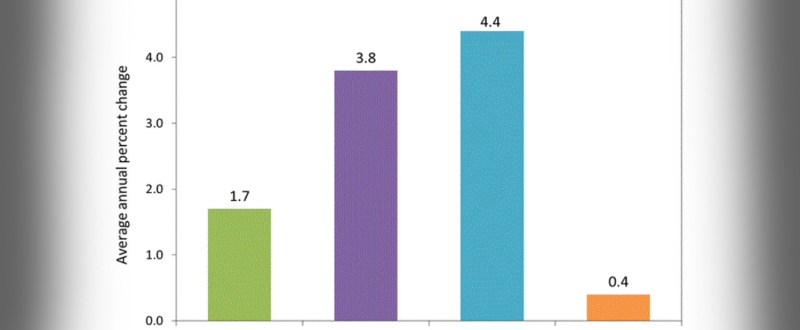
No wonder Trump can easily still command rustbelt supporters. Stagnation in the US manufacturing industry is killing prospects for wage rises. Bureau of Labor Statistics data released two weeks ago shows that while productivity increased by about 3% annually from the 1980s till 2007, annual growth since has been only 0.4%. Most of that, and more, is needed for sustainability improvements like changing to clean energy.

Labor productivity depends on engineered tools, machines and materials, so engineers are the key people to restart productivity growth. While economics and labor saving solutions were the priority for engineers in the 1950s, as evidenced by the ASEE Grinter report, now that seems to have been forgotten. Our research is revealing that today’s engineers have limited understanding on how to generate commercial value.

Students need to learn the fundamental purpose of engineering. Distilled from our research on hundreds of engineers in several countries, that purpose is to enable people to be more productive.

“Engineers are people with technical knowledge and foresight who conceive, plan and organise delivery, operation and sustainment of artificial objects, processes and systems. These enable productivity improvements so people can do more with less effort, time, materials, energy, uncertainty, health risk and environmental disturbances.”

Sustainability depends on similar improvements.

As Paul Krugman wrote more than 30 years ago,

“Productivity isn’t everything, but in the long run it is almost everything. A country’s ability to improve its standard of living over time depends almost entirely on its ability to raise its output per worker.”

Economists are hoping that the digital economy will restore productivity growth. It might. But in a world where information supply is exponentially increasing, its value must be exponentially decreasing.

Continue reading