
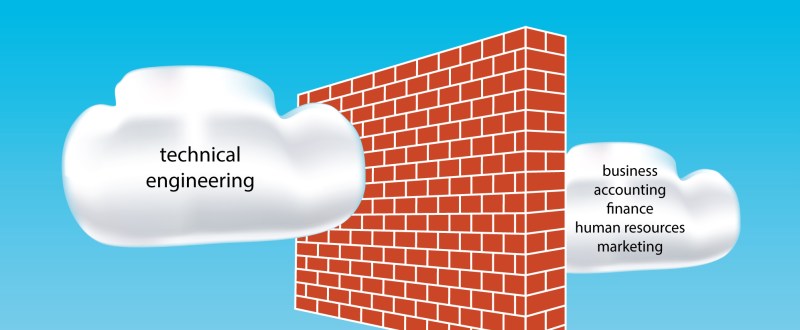
It was a privilege to be invited to lead a discussion on this at the recent Climate Smart Engineering conference by recorded video because I had to be in Pakistan for a family wedding at the same time.
Coolzy.com is my daily work: a portable refrigeration cooling machine running on just 300 Watts that provides the lowest cost personal cooling solution around, with minimal climate and environmental impact. That’s a nice illustration of climate-smart engineering. The need is critical right now! https://bit.ly/3uNY5H2
But it’s not so easy for many engineers to understand how their work creates economic, social or environmental value.
To help engineers better appreciate how their work creates value, Bill Williams and I have updated our Guide for Generating Value in an Engineering Enterprise, first released in 2017. It’s needed just as much today … Tell us what you think.
Here is an illustration that shows why it is needed.
Sitting next to the young engineer, just announced as the young West Australian professional engineer of the year a few weeks ago, was a special privilege. The citation emphasized voluntary contributions, including organising robotics competitions.
I explained I had run such competitions in the 1990s. Recently I had met the senior robotics specialist at Woodside on a bus who told me how inspiring by that experience had been and thanked me for all the hours I and others had put in to organise the competition. Those competitions remain a lifelong memory for the participants and organising them is a valuable contribution.
“Tell me about your normal day-work,” I asked.
“Oh, it’s pretty routine… I spend most of my time programming SCADA systems to generate operations reports.”
“And how much do they pay you for that? $80,000 or so? If you don’t mind me asking.”
“Not at all. $85,000 in fact.”
“Ah, I see. And how much does your company charge the client for your time?”
“Hmm. Actually I wouldn’t really know. About $100 an hour, I guess. You’d have to ask my boss Karen about that.”
“Well, unless your firm charges over $200 an hour, they won’t be making much profit.”
The young engineer looked startled… “that much? … really?”
“Yes.” I explained. “Your firm needs to charge at least two and a half times your salary. Let’s see. It’s difficult to get you working on more than 1,300 hours on income-earning work annually, often a lot less. Especially after allowing for training courses, conferences, exhibitions, proposal writing, etc. That implies an hourly rate around $170.”
“Oh, I never knew that.”
I went on…
“Your firm has to pay for insurance, your super, and possibly payroll tax as well. Administration, accounting, etc. probably adds another few percent. Your boss has to spend time guiding and mentoring you and finding paid work to cover the cost of your salary. You’re bound to need a laptop with IT support, special software and probably hardware as well. And there’s office space, power, access to specialized IT services, etc.”
I noticed Karen had joined the conversation. She said “it’s tough out there. Each tender is a race to the bottom on hourly rates. So many lines of code, so much a line, hourly rates for site work and so on. It’s a cut-throat business. We’re doing OK because we have on-going government maintenance work, but it’s a real struggle without that. We’re just a small firm, of course. It’s easier for the large firms, they can charge double of more of our rates, of course.
“Why do you think they can charge that much?” I asked.
“Well, I guess they have the name, the brand of course, and their reputation. They also sell their own hardware, of course, they make a big profit on their equipment. I don’t really know.”
“Well, I’m interested because I research engineering practice. I’ve interviewed many engineers in your field, several hundred overall in different countries. Early on, I interviewed an engineer working for one of those large firms. He told me how embarrassed he felt about the incredibly high hourly rates they charged and the handsome profits they made for their American parent company. They were charging around three times as much as small firms doing the same work. Gradually I came to realise why they were able to do that.
That firm placed a huge emphasis on working with the client well before any tenders were called. They had a rigorous procedure, a painstaking process for building a detailed understanding of the client’s requirements. Of course, that takes lengthy meetings and a lot of time studying the client’s existing plant and software systems.
You see, not many clients know exactly what they need, as opposed to what they tell you they want.
Let me tell you about a related example … it will help you understand what I mean a little better.
I was chatting one day with a senior engineer in one of our largest international engineering firms who was coordinating a value engineering exercise on their drawing production processes. ‘I think we can shave 10% off the cost of every drawing, that’s real value!’
I asked if the firm was also studying how they could add value for the client by adjusting or reconfiguring the design represented by the drawings based on the firm’s previous experience with similar projects. Given the cost of the detailed design and drawings was only a small part of the overall project cost, a few percent at most, it wouldn’t take much design improvement to yield the full cost of the drawings, perhaps much more. ‘Oh, I never thought of that! That’s something really significant. No, we haven’t considered that angle at all.’
So, I think you can see now that there’s so much opportunity to add value for the client by working closely well before the tender stage. By the time the tenders are called, there’s much less opportunity to generate value unless you have a way to complete the work far more cheaply than your competitors.
By working with the client, you can shape the ultimate tender in a way that your firm’s bid will be the preferred one, even if it’s more expensive, because the client will appreciate the added value you can provide.”
Both Karen and the young SCADA engineer were quiet for a moment. “Thank you, that’s really interesting. Where can we learn more.”
“Well, I am helping set up a workshop at the end of November on generating value from engineering work, it will be at the Climate Smart Engineering conference. If you’re able to come… Otherwise you can read our newly released guide for generating value in an engineering enterprise.
Yes, the emphasis here is on the climate, and sustainability in a broad sense where solutions need to be financially feasible, socially acceptable in the long term, with minimal if any environmental disturbance and greenhouse emissions.
Fortunately, here in Australia, the social and political climate has shifted appreciably since those disastrous fires four years back and equally disastrous political response.
Yet, as engineers, we often struggle to convince clients to do more than the minimum needed to comply with current regulations. It’s no different, in principle, to the race to the bottom on rates constraining Karen’s firm in the example I just described. So many clients just want the cheapest solution possible.
 THE MAKING OF AN EXPERT ENGINEER
Engineering identity. The boundaries between engineering and business are fading away. Service has a cost. Engineers have become a node in that loop. Input and output.
I wish one day, our work will not be measured as sheer outputs. Artifacts have an element of art in it. That is how I understand the English term as I read Bucciarelli’s notion of engineering as the making of artifacts.
LikeLike