The Little AC that Can

I was brought up on the story of the little engine that could, taking on a seemingly impossible task with the mantra “I think I can… I think I can… I think I can… I think I can…”

We at Coolzy think we can help avoid many gigatonnes of CO2 emissions. Read and tell us if we’re wrong.

I have just returned from a month in Pakistan where the temperature in our bedroom never dropped below 30 °C, the upper physiological limit for sleeping with a powerful ceiling fan for cooling.

We slept comfortably with our Coolzy and an Igloo bed tent.
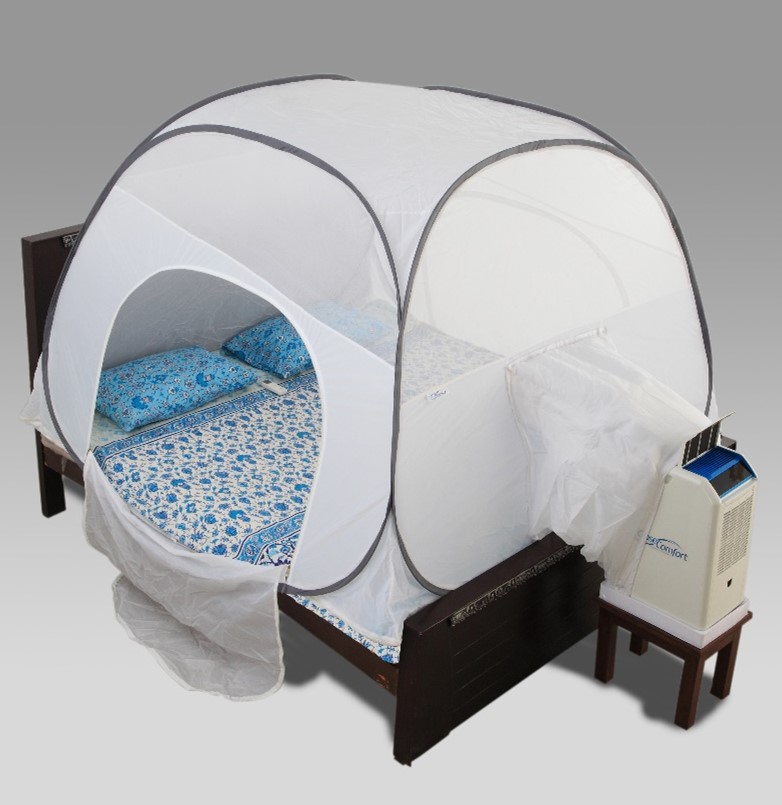
Coolzy and Igloo tent which my wife and I have used in Pakistan for 10 years now, sleeping in a first floor bedroom which reaches 40 °C. Like most houses in Pakistan it’s made from concrete with solid brick walls and no insulation at all, even on the roof.

Lives, health and prosperity across South Asia and many other countries will increasingly depend on artificial cooling. While only a tiny minority routinely enjoy air-conditioning today, perhaps 2%, a huge expansion lies ahead according to many predictions. However a large increase in greenhouse emissions will come with that expansion, adding as much as 13% of today’s global emissions when we need to get emissions to zero by 2050.

Can Coolzy help?  We think it can.

Thanks to the 2016 Kigali amendment to the 1972 Montreal protocol, the international community has agreed to phase out refrigerant gases that damage the ozone layer, and also gases that cause significant climate warming. Some of the latter gases cause thousands of times more warming than an equivalent amount of CO2 – the value for any particular gas is its “global warming potential” (GWP).

With the large-scale change from using fossil fuel to generate electricity to renewables such as solar, wind, geothermal, and hydro-electric power, also to nuclear power generation, the emissions of CO2 associated with electricity generation will fall significantly over time.

As a result, emissions from air-conditioners will fall from about 2035 onwards.

Broad global adoption of Coolzys can contribute an additional large reduction in emissions, but only when Coolzys have significantly eliminated the use of split air-conditioners, from about 2040 onwards.

We think Coolzys can reduce overall global emissions by 17 GtCO2, about half the current annual global emissions, about 35 times Australia’s current emissions. This document explains how in more detail .

Even if the use of conventional air-conditioners does not increase as many have predicted, Coolzys would increase human health, well-being and capacity for productive work, enabling faster progress towards achieving the Sustainable Development Goals (SDGs).

So how can Coolzys slash global emissions?

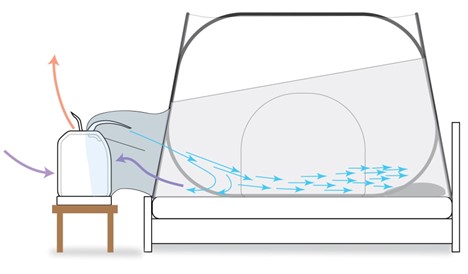
With the Igloo bed tent, a Coolzy delivers much the same comfort for sleeping as a split air-conditioner running on 5 or more times the amount of electricity. Darkness is significant – using solar electricity will rely on storage, significantly increasing the cost. That’s why many hot, low-income countries will continue to rely on fossil fuel electricity for decades to come: they need power at night for cooling.

The refrigerant gases in conventional air-conditioners will be around for decades too, with global warming potential a thousand or more times that of CO2. Coolzys use only 100 grams of propane inside permanently welded pipes. If it escapes, the climate impact is negligible in comparison, only 300 grams of CO2 compared with two or more tonnes of CO2 equivalent global warming from a conventional air-conditioner.

Using so little power, only 100 – 150 Watts per person, Coolzys cause far less emissions from burning fossil fuels, or far less investment in solar panels and batteries.
Anyone using a Coolzy instead of a conventional air-conditioner is saving around one tonne of CO2 emissions every year. A billion people doing that would save around a Gigatonne of CO2 emissions. Can we scale up to reach that level?

Coolzys are cheap to manufacture in bulk with between a third and half the materials needed for a conventional air-conditioner.

For people who cannot afford an energy-hungry conventional air-conditioner, people who today have to go without healthy sleep for months at a time with indoor temperatures in the high 30s up to 40 °C, Coolzy is transformative. With Coolzy, people regain their capacity for productive work, and babies no longer have their brains and bodies literally cooked in their first year of life. And yes, our experience shows that people with very low incomes by Western standards will buy them. It’s just a matter of time.

We are now selling Coolzys in more than 30 countries around the world, from Australia and Indonesia to Europe and the USA.

We will need massive investment, and we think that will come… soon. We think we can do it. What do you think?

If you’re sweltering in the European and USA heatwaves now, why not order one right now and try it for yourself?  (Please note that Igloo tents are still on their way to Europe and USA.)

It’s Hotter than I Expected

Visiting Islamabad at the height of summer is not everyone’s idea of fun. With Coolzy to keep me comfortable, I can enjoy the superb mangos in season at the moment. For a week, the temperature in our bedroom hovered around 38 – 40 °C, but with the Igloo tent, we slept through the nights, not noticing the load shedding.

However, I was surprised.

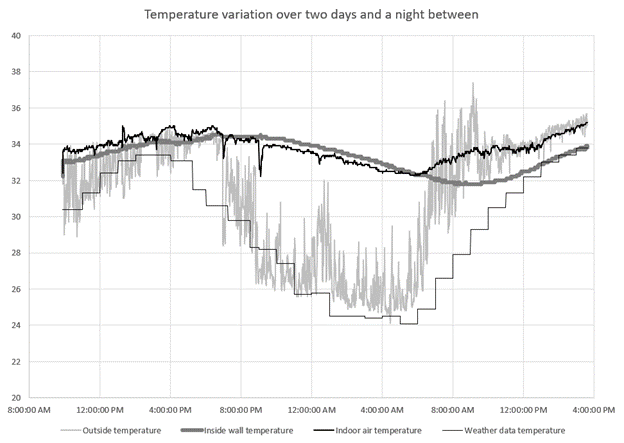
On one of the cooler days I used a simple thermocouple data logger to record the temperature just outside our open window, on the inside of the wall, and also the air temperature at 40 cm above floor level, around the height of our mattress.

And here is the result over two days and a night.

Read More (5 mins)

Physiological Effects of Hot Climates

(Updated June 20, 2023)

Temperatures in Delhi reached 46 °C this week. How does this kind of heat affect people?

In my last post “Why do most hot countries remain poor?” I summarised explanations by influential economists and geographers. I reviewed the quantitative evidence that demonstrates the strong inverse link between climate temperature and economic productivity.

Of course, a correlation does not necessarily imply a cause.

23 years on, we now have research on physiology that has helped us understand a little more on how people are affected by hot climates. While there are still large gaps in our understanding, there is now little doubt that cooling is essential for economic and social development, even more so as climate warming raises temperatures everywhere.

READ MORE – ABOUT 20 MINUTES, BUT WORTH THE EFFORT

Why do most hot countries remain poor?

In my first post in this thread, Pakistan is Never Boring, I introduced the key role that engineers have in economic development. In this series, I will explain how my research journey has led me to an understanding on what seems to be preventing economic and social development in countries like Pakistan and how engineers might remove most of the impediments. Pakistan is one of many countries experiencing an extremely hot climate, possibly the hottest on the planet, for several months every year. It also has cold winter months too.

Have you ever wondered why hot countries tend to be less prosperous, with some notable exceptions?  

Think of India, Bangladesh, Pakistan, Indonesia with more than a quarter of the world’s population. Then think of countries in Africa such as the Democratic Republic of Congo, Cameroon, Nigeria, Ghana, North and South Sudan, Kenya, Tanzania, Zimbabwe and many others.

There are also some cold countries that are poor too. Russia today is a relatively poor country.

Of course, measurable economic wealth is not necessarily related to happiness, but it certainly helps with health and education.

READ MORE, ABOUT 10 MINUTES – BUT IT WILL OPEN YOUR EYES TO SOMETHING NEW

Pakistan is never boring

March 15, 2023

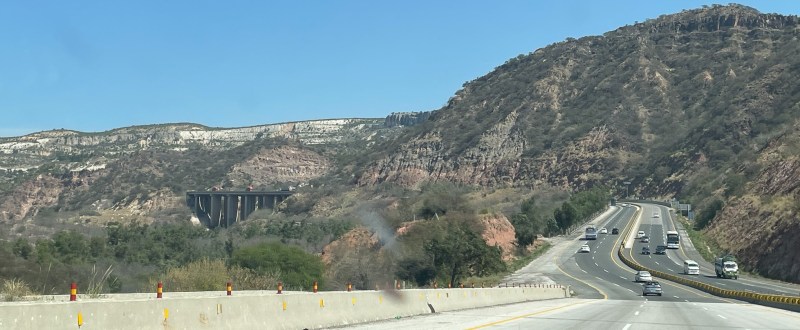
Feature image shows the M2 Peshawar – Lahore motorway traversing the 800 metre high Salt Range near the Jhelum river.

Pakistan is never a boring place to visit. Some friends ask, “are you going to be safe?” others don’t ask directly. Most reports reaching people outside tell of terrorist threats, riots or politically inspired assassinations. For me, the main threats are microbiological terrorists: bacteria and viruses in water or food.

Continue reading

What we know, and mostly don’t know about engineering practices

This is the script for my REES-AAEE-2021 Keynote. The video is here, and the powerpoint slides are available on request if you would like to use them for education purposes.

For a sustainable future, we need large productivity improvements. Engineers are critical contributors, but we need deeper understandings of engineering practices and how education influences them to make the necessary improvements. Without this, education reform arguments are fragile at best.

Read the Script of the presentation (30 mins)

Changing notions of comfort

I am so thankful I don’t have to work all the time in an air-conditioned office building. Especially since Covid-19, our entire Close Comfort team works part of the time at home. We’re happier and feel healthier too.
Of course, I have a Coolzy personal air conditioner with me. (Since 2021, Close Comfort portable air conditioners have been branded with the name Coolzy). Our team members each have at least one at home as well.
Lee Kuan Yew, honoured as Singapore’s founding father, loved to tell everyone how air conditioning enabled today’s Singapore by providing a comfortable working and sleeping environment. However, there’s a dark side that comes with 20th-century air conditioning systems.
It is well established that people who live most of the time in constant temperature air-conditioned buildings lose their natural thermal acclimatization. As a result, they only feel comfortable at about 23 °C.
Recently I hailed a Singapore cab and climbed into the shiny black refrigerator on wheels, feeling so glad I remembered to bring a cardigan tied around my shoulders. The driver exclaimed, “Ah, it’s so hot today, la!”
“What’s the temperature?” I asked.
“33, it’s really hot, la”.
“But, yesterday it was 32”.
“Yeah, 33, it’s so hot today, la!”

Continue reading

Lost in Urdu translation?

Today with the internet and web sites like Freelancer.com, you would think it is possible to find native speakers of any language who can readily do translation for you and prepare documents like instruction manuals.  And with computer packages like InDesign, you would think that the job of setting up a professionally printed instruction booklet again would be trivially easy.  Well, maybe in some languages, but not in Urdu.  This has been a fascinating learning experience, and frustrating too at times.

I never imagined that translating our air conditioner user manual and getting it designed ready for printing would have been so difficult.  This manual is critical for us: few people will read it, but the few who do will pass on that knowhow to lots of other people.  It’s really important that they get it right.

Continue reading

Lahore Book Launch

“The Making of an Expert Engineer” was officially launched in Lahore at the Avari Hotel on March 3rd before a gathering of 120 engineers, engineering faculty, aspiring engineers, and friends.  Prof. Fazal Ahmad Khalid, Vice Chancellor of the Lahore University of Engineering and Technology (UET) presided at the launch.  The launch was sponsored by the author’s company Close Comfort.

DEEJ2227

James Trevelyan demonstrating the Close Comfort bed tent with air conditioner.

Audio Recording:

Selection of photographs taken at the event

DEEJ2420

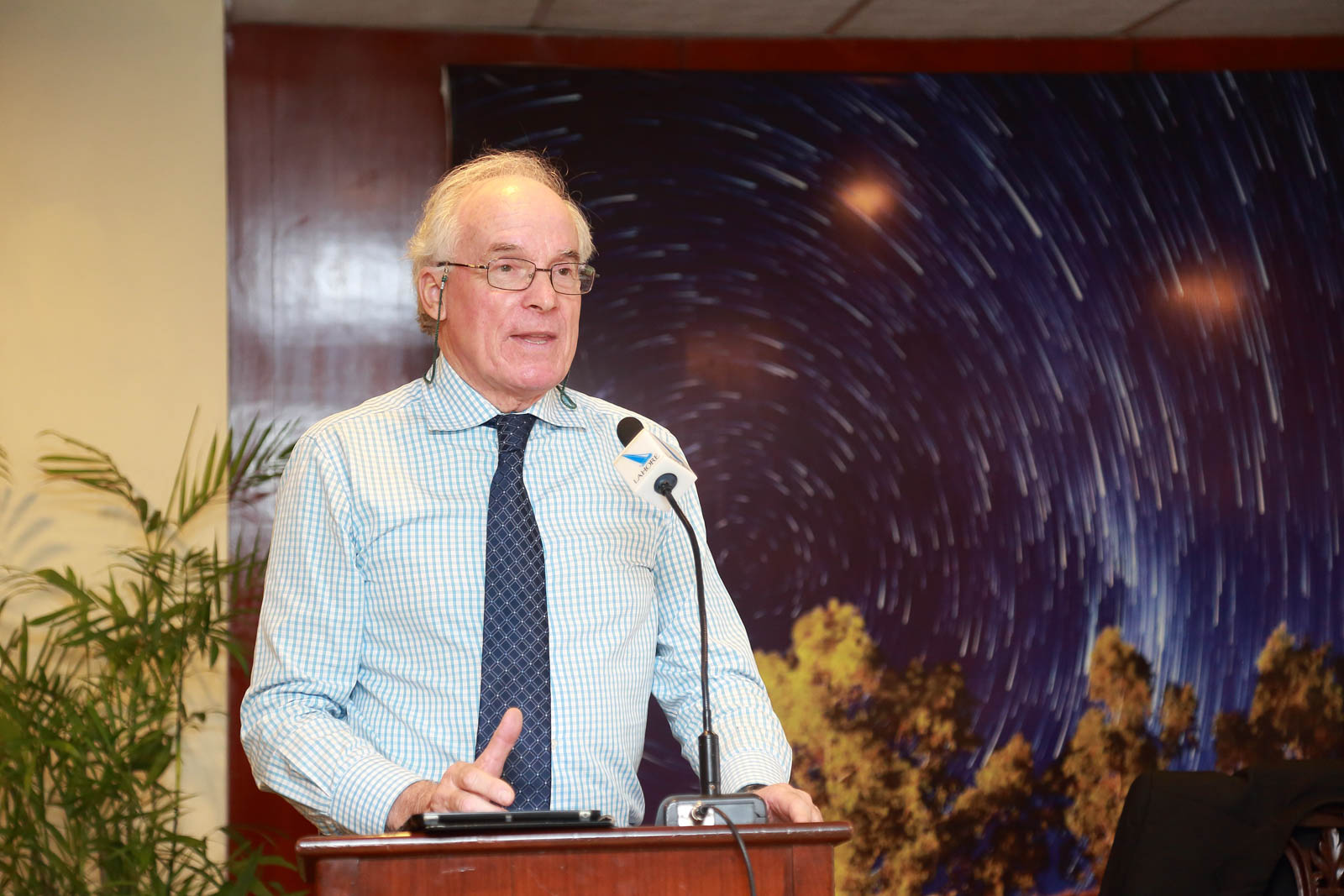
James Trevelyan speaking about the book

DEEJ2603

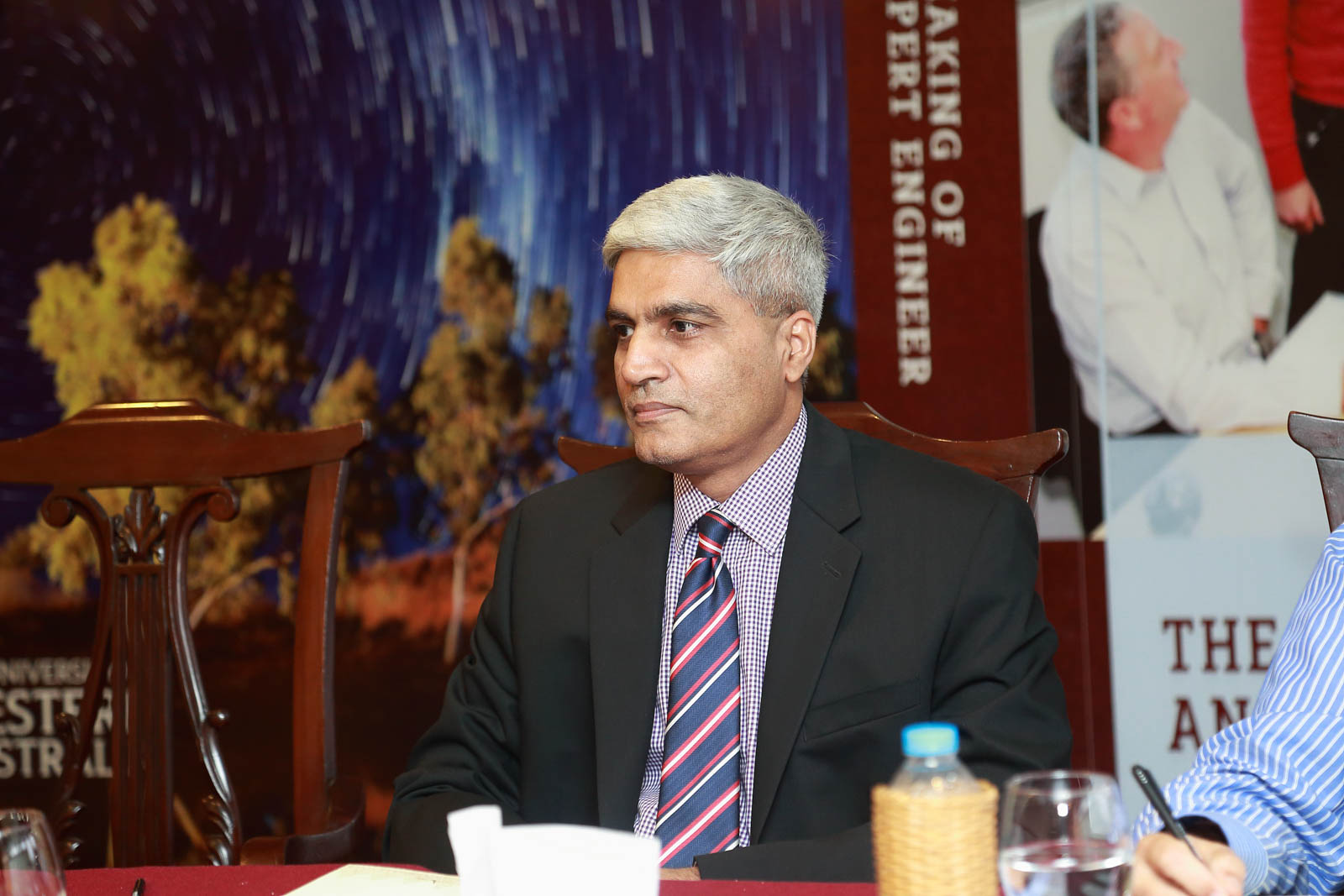
Prof Fazal Ahmad Khalid

Continue reading

Pakistan Launch: Islamabad

“The Making of an Expert Engineer” was officially launched in Islamabad at the Serena Hotel on January 7th before a gathering of 120 engineers, engineering faculty, aspiring engineers, and friends.  The Hon. Ms. Marvi Memon, Minister Chair of Benezir Bhutto Income Support Fund spoke about the potential impact of the research on the poorest 5.8 million people in Pakistan served by the fund. Lieutenant General (R) Syed Shujaat Hussein, former rector of National University of Science and Technology presided at the launch.Close-Comfort-FB-Logo-151207

The event was sponsored by Close Comfort Air Conditioning

MH4_0499-Edit

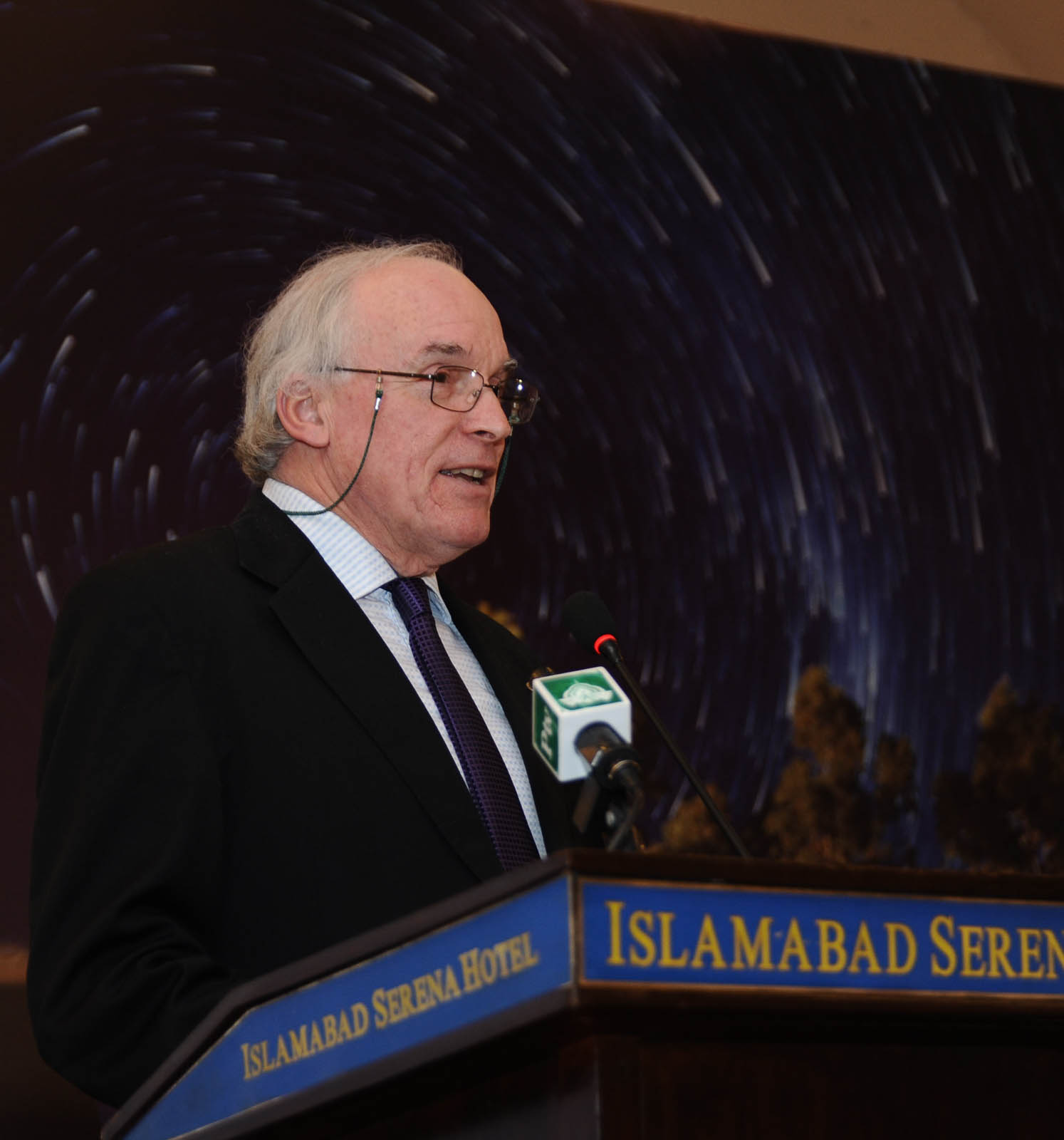
James Trevelyan speaking about the book – transcript of speech appears below.

Continue reading