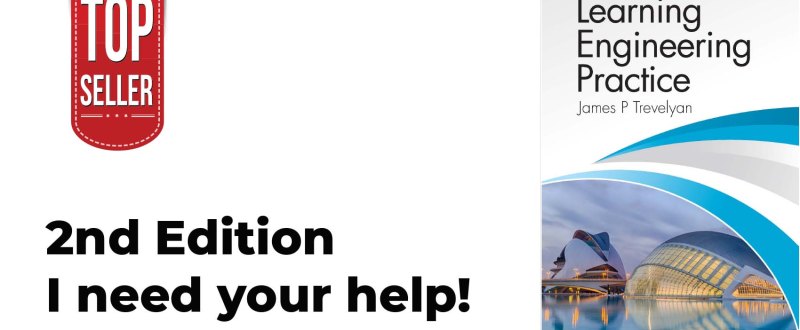
I was honoured to receive a message from Taylor & Francis, my publisher, telling me that the book has sold very well and they would like an updated edition.
On my list for improvements so far are:
How AI can help early career engineers and pitfalls to avoid (ie which types of AI can be trusted to be helpful);
More emphasis on LinkedIn for job seeking;
Distinguishing different kinds of engineering work in the introduction: professional engineering, engineering technologist and engineering technicians;
Ideas for early-career engineers on how to apply an understanding of social and economic value generation in engineering practice; and
Influence of climate in low-income countries.
I need your help, please.
Please re-familiarise yourself with the book, and send me suggestions for improvements, including any of your own experiences that could help with the topics above. Also, if you really think a chapter or part of a chapter is not needed, please let me know. I want to keep the book as short and easy to read as possible.
Send me an email or reply to this post and start a discussion.
Coolzy.com is my daily work: a portable refrigeration cooling machine running on just 300 Watts that provides the lowest cost personal cooling solution around, with minimal climate and environmental impact. That’s a nice illustration of climate-smart engineering. The need is critical right now! https://bit.ly/3uNY5H2
But it’s not so easy for many engineers to understand how their work creates economic, social or environmental value.
To help engineers better appreciate how their work creates value, Bill Williams and I have updated our Guide for Generating Value in an Engineering Enterprise, first released in 2017. It’s needed just as much today … Tell us what you think.
Politicians look for engineers to blame. Economist Ashoka Mody’s great book “India Is Broken” suggests instead that corrupt politicians, around a third of whom face criminal charges, are to be blamed.
Seeking individuals to blame is likely to obscure the real causes. These and hundreds of smaller, less notable engineering disasters every year result from organization failures, not individuals.
Unfortunately, there is still considerable ignorance about engineering practices, even among our own engineering communities.
Effective engineering at its best can be extraordinarily dependable: think about the amazing rarity of serious aircraft crashes given that tens of thousands of aircraft are flying at any given moment. We have known for decades that air safety depends on high reliability organizations that allow for human error. Multiple layers of organization and technological barriers keep us flying in safety, so people can make mistakes and the organizational systems protect us from the consequences, almost always.
Is it possible that much of the engineering education research community, myself included, has misunderstood the notion of competency? With many others, I think, I was unaware of literature drawing attention to some of the mistakes that can easily be made when talking about competency. I conclude by suggesting a way forward, beyond ‘competencies’.
This is the script for my REES-AAEE-2021 Keynote. The video is here, and the powerpoint slides are available on request if you would like to use them for education purposes.
For a sustainable future, we need large productivity improvements. Engineers are critical contributors, but we need deeper understandings of engineering practices and how education influences them to make the necessary improvements. Without this, education reform arguments are fragile at best.
A Pakistan university Vice Chancellor told me how, when he first took up his position, he challenged his engineering faculty.
“Listen, he said, you and other engineering schools in Pakistan have graduated tens of thousands of electrical engineers, yet, the more you graduate, the worse electricity load shedding becomes.”
“Sir, they replied, that is a political problem, it’s nothing to do with engineering! The politicians have accumulated a huge circular debt, which is not real debt, just an accounting aberration to cover the fact that rich people don’t pay for electricity.”
The Vice Chancellor smiled. “Please remember, he said, electricity and water utilities are staffed and run by engineers. Furthermore, the debt is real debt: Pakistan State Oil now has to pay cash in advance of delivery because it ran up too much unpaid debt with suppliers. As long as people can use electricity without paying enough to cover the cost of fuel to run generators and maintaining and extending all the transformers and cables, the problem will get worse. So whether you like it or not, as far as Pakistan is concerned, it is an engineering problem. That means it’s your problem too!”
Pakistan’s politicians and business community have a low opinion of Pakistan engineers: it is not just load shedding and poor water service quality. Pakistan is a high cost operating environment, and Pakistan engineers (with a few notable exceptions) have a poor record for delivering on promises: on-time, with good quality, high safety standards, and within financial constraints. In short, Pakistan is an unattractive destination for capital investment because engineers (among others) don’t deliver what they promise.
Nobel prizewinning economist Jeffrey Sachs wrote in his 2005 book “The End of Poverty” how extreme poverty can be eliminated by implementing six priority actions (Ch12, p234-5):
1) Agricultural inputs (e.g. fertilizer, water harvesting, irrigation) and produce storage, including roads and transport for people and materials;
2) Investment in basic health: clinics, medicines;
3) Investment in education;
4) Power, transport and communication services;
5) Safe drinking water and sanitation (without which (2) is ineffective).
Although Sachs did not allude to this, we can see that all require effective engineering, either directly, or indirectly by providing productivity improvements that enable spare human capacity to be available for education, healthcare and infrastructure investment.
If you look at Pakistan, a middle of the road low income country, around half the workforce is needed just to supply enough food and water for everyone. In Australia, less than 2% of the workforce is needed, and they produce a substantial surplus for food exports. It’s engineering, successful engineering, that makes the difference. That of course relies on lots of other things as well – education, effective means to enforce contracts – law and government regulation, health care and so many others. Once engineers have lifted human productivity, there are people available to provide these other support services. That’s what’s missing in low income countries.
I think there’s no better illustration than the real economic cost of safe drinking water. In Pakistan, the cost (including the indirect cost of unpaid female labour) typically ranges between US$50 and $150 per tonne. In Australia it’s about $2 per tonne. I explain why in my book and my 2012 TED talk. In other words, because we have not enabled engineering to work so well in Pakistan, the poorest people have to pay far more for water ( and all the other essentials for life ) than wealthy Australians. There are many contributing issues here.
There are wonderful social and commercial opportunities for engineers who set out to fix this and help eliminate poverty. They can start by recognising the economic needs and by devising affordable mass-market solutions. The next step is to provide a credible financial case for investors, along with the reputation for delivering on promises. This last aspect is probably the most difficult: engineers currently have an appalling reputation in both government and commercial investment circles. That’s why it’s best to take small steps, one at a time, and gradually build the reputation needed to achieve results on a grand scale.
In the book I explain some of the insights gained by truly expert engineers. You can learn how they think and how they deliver for their organisations. In doing so, they earn 2 – 5 times as much as other engineers because their organisations recognise the value they contribute.
You can do that too and become a real contributor to the Global Citizen Project. As an engineer, you can do much more than adding to the noise. I hope you take up this challenge. If you do, please write and tell me about what you have been able to achieve.
Some of you may have wondered why there has been a little gap in my blog posts. I have been pre-occupied with visits to several countries.
My other major project, Close Comfort has developed very quickly with keen anticipation particularly in Pakistan where electricity supplies are subject to frequent interruptions due to load shedding. Pakistan’s electricity grid is struggling to keep up with demand for air conditioning, and I hope to be able to offer a sustainable solution, as explained in Chapter 13 of the book. Continue reading →
The book was launched at The University of Western Australia on November 10 by Peter Meurs, Director of Development at Fortescue Metals Group.
Speeches by John Dell, Faculty of Engineering, Computing and Mathematics, Peter Meurs, and the author.
(20 minutes)
Quotes from Peter Meurs
“It really does represent a breakthrough in thinking. It bridges the gap between the academic side, studying engineering, and the real engineering world.” (4:02)
“It presents more than just a set of ideas and concepts.”
It represents interviews with hundreds of real engineers, and is seeking to find those characteristics that make an expert engineer.” (4:26)
“Expert engineers are not necessarily technically brilliant but they’re engineers that work out the complex processes of thinking, communicating, collaborating and challenging that lead to value being added to their organisations and ultimately to the world.” (4:38)
“I think The Making of an Expert Engineer applies to all engineers. I wish I had read it 20 or 30 years ago… it would have made a real difference. Many engineers that feel they’re stuck in a rut, they’re not adding value to their organisations, they’re frustrated, will greatly benefit from reading this book and it will help them progress back to their dream of making a real difference in the world.” (5:49)
“James goes well beyond just presenting concepts and ideas … he backs it up with real case studies and stories that add credibility and colour.” (6:15)
“It presents 17 misconceptions, things like “engineering jobs are always advertised” or “my boss will tell me what to do”. That’s a total misconception. It has 85 practice concepts like “time changes the value of money” and “human emotions influence engineering” and “a project plan is a living document”. There’s lots of engineers that need to learn that if you want to be successful. (6:43)
“The conclusion of the book is powerful. James invites all engineers to step up to recognise the contribution that we do make and can make to society as a whole and through my engineering career, through making many mistakes and also through facing challenges I have really come to understand that concept.” (8:51)
One thing’s for sure, when you take on a big project, things will go wrong and it is simply so easy to say “Oh, unfortunately that went wrong so it’s going to cost more and take longer.” A real engineer will step up and say we can still achieve the cost and schedule and all of the requirements. Great engineers, when they’re faced with adversity and challenges, rally the network, apply their technical coordination skills, draw on the collective experience of vendors, fabricators, consultants and contractors and deliver the original solution or something better. (9:15)
In my family I will need at least 4 copies, one for me, one for two son-in-laws who are engineers and one for my son who is just completing engineering degree, and at Fortescue I’m going to need at least forty copies for our graduate program, so congratulations to James and the whole team at UWA for the many years of research that form the foundation for this book.(10:02)
“I think this book has the potential to change engineering and the way that engineering is taught. (10:31)”
Peter Meurs, Director of Development at Fortescue Metals Group through tripling of production capacity in record time, and also co-founder of WorleyParsons Engineering.
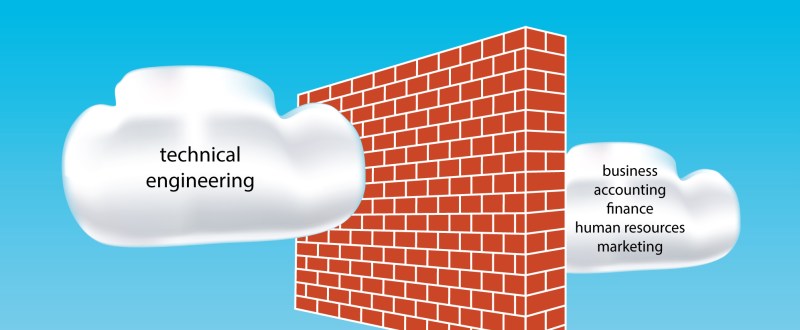
In our research we encountered some frustration among engineers about decisions that affect their work. The frustration often came from a perception that the people making these decisions did not understand engineering issues, and hence made decisions that resulted in less than desirable engineering outcomes. Sometimes this frustration was directed at clients who seemed to make short sighted decisions that resulted in problems that required more money to fix in the longer term. At other times, engineers seemed to blame bad decisions on ‘politics’, or the influence of people with enough power to overturn what the engineers saw as a more logical choice.
In some extreme cases, engineers would say something like “This company is run by f——-g accountants!” (Expletive has been replaced by dashes.)
Many engineers know that part of their role is to prepare a business case for new investment, or proposals with the aim of persuading clients to commission them to take on a new project. Engineers often have to conduct detailed technical analysis for the documents that go to clients, and often are also responsible for forecasting commercial outcomes. Net present value calculations and commercial sensitivity analyses are often part of this work.
It can be disappointing for engineers to put in long hours only to see the results ignored and what seem to be sound proposals passed over for seemingly illogical reasons. Continue reading →



 THE MAKING OF AN EXPERT ENGINEER