Why do most hot countries remain poor?

In my first post in this thread, Pakistan is Never Boring, I introduced the key role that engineers have in economic development. In this series, I will explain how my research journey has led me to an understanding on what seems to be preventing economic and social development in countries like Pakistan and how engineers might remove most of the impediments. Pakistan is one of many countries experiencing an extremely hot climate, possibly the hottest on the planet, for several months every year. It also has cold winter months too.

Have you ever wondered why hot countries tend to be less prosperous, with some notable exceptions?  

Think of India, Bangladesh, Pakistan, Indonesia with more than a quarter of the world’s population. Then think of countries in Africa such as the Democratic Republic of Congo, Cameroon, Nigeria, Ghana, North and South Sudan, Kenya, Tanzania, Zimbabwe and many others.

There are also some cold countries that are poor too. Russia today is a relatively poor country.

Of course, measurable economic wealth is not necessarily related to happiness, but it certainly helps with health and education.

READ MORE, ABOUT 10 MINUTES – BUT IT WILL OPEN YOUR EYES TO SOMETHING NEW
Pakistan is never boring

March 15, 2023

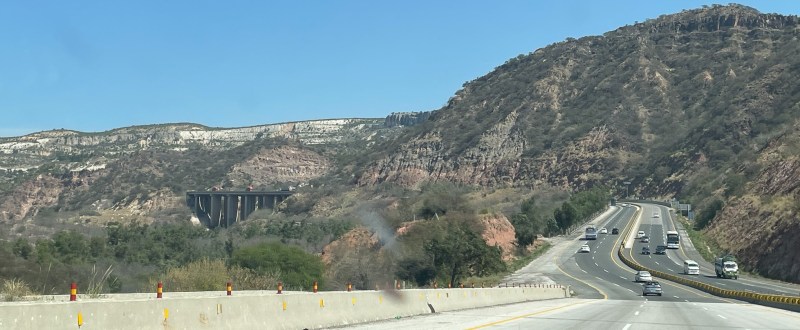
Feature image shows the M2 Peshawar – Lahore motorway traversing the 800 metre high Salt Range near the Jhelum river.

Pakistan is never a boring place to visit. Some friends ask, “are you going to be safe?” others don’t ask directly. Most reports reaching people outside tell of terrorist threats, riots or politically inspired assassinations. For me, the main threats are microbiological terrorists: bacteria and viruses in water or food.

Continue reading

Listening

I have always emphasised listening as the single most important skill for engineers to develop. It’s easy too. It’s not the same as hearing. So I was happy to come across this podcast on listening from Australia’s ABC. It’s entertaining and thought-provoking. If you want to improve your listening skills, look for an ABC podcast with a transcript. Listen to the podcast (at full speed, for just 5 minutes or so), then prepare your notes, and then compare your notes with the transcript to find how much you missed. For more see “Learning Engineering Practice”. Or buy the book “People Skills” by Robert Bolton.

Otter.ai is a great app for improving your listening or language comprehension. Listen to any talk radio or podcast. Use Otter to create a transcript while you listen, bot don’t look at it yet. While listening, take notes. After about 5 – 10 minutes, stop listening and stop Otter. Expand your notes for a few minutes. Then compare your notes with the transcript. Highlight significant parts of the transcript that your notes did not mention. Give yourself a score out of 100.

Repeat this exercise daily and you will be surprised at how quickly your listening skills improve.

Updated 11th May 2023

Illustration Credit: Saeed Karimi at unsplash.com

New book “Learning Engineering Practice”

If you are a member of Engineers Australia you can order with a 30% discount here. If you’re not a member of Engineers Australia, email me for a discount voucher.

Why buy this book?

Cover design for Learning Engineering Practice

If you’re a student or recent graduate, the book will help you get ahead in the search for paid employment, and the more you work at it, the more attractive you will be for employers.

If you’re an early career engineer, this book will help you navigate the complexities and frustrations of engineering workplaces, and get your career advancing more rapidly. You will soon be far more valuable for your enterprise. As one recent reader wrote “if only I had access to this book earlier in my career I could have avoided so many difficulties”.

Lots of companies struggle with on-boarding graduate and early career engineers – this book will help them and their supervisors. They may not hit the ground running, but they soon will be, and generating greater value for their employers.

Want to know more?

Here is the contents summary.

How is the book different from “The Making of an Expert Engineer”?

a) About one fifth the price (paperback), and one third the length;

b) Short, easy to read chapters for students and early-career engineers;

c) Includes guidance on commercial and social value generation that came from more recent research;

d) Includes a detailed curriculum and performance checklist for early career workplace learning;

e) Updated material on sustainability and work in low-income countries.

Naturally, as an introductory book, there are many references to “The Making of an Expert Engineer” for a more advanced treatment of topics such as engineering financial decision-making.

Can Indian engineering regain its former shine?

India has produced some of the world’s greatest engineers and scientists and graduates hundreds of thousands of engineers annually. Mughal Indian civil engineering led the world 500 years ago. Therefore, today’s relatively slow progress towards a modern, sustainable, industrialized society is puzzling. India’s national productivity, along with many other low-income countries, lags advanced economies like USA, Japan, and Europe by a factor of about 5, a gap that has hardly changed in many decades.

Continue reading

Can Indian engineering regain its former shine?

India has produced some of the world’s greatest engineers and scientists and graduates hundreds of thousands of engineers annually. Mughal Indian civil engineering led the world 500 years ago. Therefore, today’s relatively slow progress towards a modern, sustainable, industrialized society is puzzling. India’s national productivity, along with many other low-income countries, lags advanced economies like USA, Japan, and Europe by a factor of about 5, a gap that has hardly changed in many decades.

Continue reading

Culture, value perceptions shape engineering practice

{This is the plenary address I delivered last Friday at the World Engineering Convention – WEC2019. I entered the stage to loud music … a little unexpected … to help the large audience feel awake and energised at 9 am in the morning.}

Did you know…

In the UN documents detailing the Sustainable Development Goals, engineering is NOT mentioned at all?

We have to change that because engineering is crucial for implementing these goals.

Read more to understand how you can help

Engineering Heroes Podcast

I was honoured to invited to speak at the World Engineering Convention in Melbourne next Friday morning at 9 am. Dom and Mel Gioia interviewed me for their Engineering Heroes Podcast series. I hope it starts some interesting discussions around engineering communities in Australia and elsewhere. I launched into the interview with the ideas I was planning to talk about next Friday. So you can hear a preview here…

Well, you could have done… But I changed my mind.

I am going to take a different approach, more relevant to engineering globally, and with sustainability in mind. So the podcast is a kind of preview. Please join me next Friday in Melbourne to hear a different take on this. How culture and value perceptions influence engineering practice, and how we could transform our world.

Here’s the podcast link. Otherwise search for it on major podcast platforms.

Engineering Value Creation

Before reading this, please see the post of December 7, 2017, where I have released a comprehensive guide for engineers, students and educators on value creation in engineering enterprises…..

In my last post, I wrote a brief explanation about value and value creation, noting that “value” has many different meanings.

In this post I will summarize what Bill Williams and I think is a new theory of engineering value creation, the subject of my address to the International Conference on Engineering Education Research (iCEER 2016) in Sydney on November 24.

Continue reading