Engineers Registration and Productivity in Australia 2025

This is an edited version of my original post on June 28. The final submission is now available from the links in this post. A big thank you to all the people who provided valuable feedback and suggestions for improvements.

This post releases my draft submission to the upcoming government productivity summit in Australia: it will be a written response to the call for public comment by the Productivity Commission.

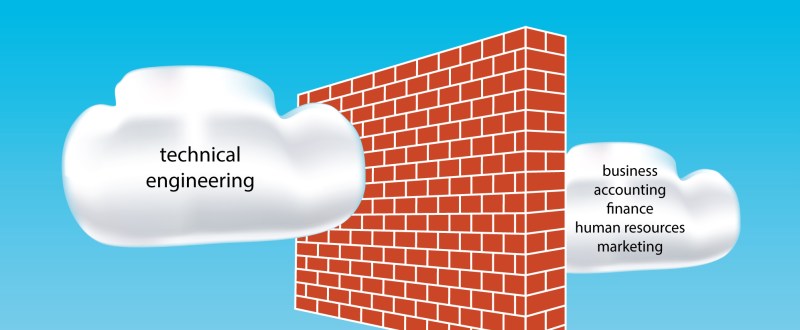
In this submission I argue that the current system for registration of engineers in Australia is not fit for purpose. Instead of registering individual engineers we should register engineering firms instead because firms influence the performance of their engineers more that individual attributes like technical proficiency or competency.

I suspect this will be a novel idea for many and might be controversial. Any feedback will be welcome, especially counter-arguments.

Engineers are key actors influencing productivity in Australia. Engineers conceive, deliver, operate and sustain products, infrastructure and systems that enable ordinary Australians to be productive.

There are two significant engineering performance issues in Australia imposing significant avoidable costs on government, private firms and the community.

  1. Large and small engineering projects are failing to meet investor expectations, causing large losses for Australian companies and governments amounting to at least AUD 50 billion dollars annually. These failures arise partly because they remain hidden by their owners so engineers cannot learn from past mistakes, partly because of collaboration weaknesses, and partly because most engineers have only a weak understanding on how their work contributes economic and social value. Apart from the financial impacts, these failures are also delaying our energy transition from fossil fuels to renewables.
  2. Performances on routine engineering work such as maintenance show similarly large opportunities for improvement. UK and Scandinavian research has observed that even in large and well-organized companies, operating and maintenance mistakes contribute opportunity costs up to 50% of reported turnover. The core issues lie with the interactions between people, mediated by computer information systems.

Both issues have significant productivity impacts. The immense costs are potentially avoidable. Even a 10% reduction in losses would be a significant productivity boost.

Neither engineers nor engineering have been mentioned in Australian Productivity Commission reports since the mid-1990s. It seems that the significance of engineering as an influence on Australian productivity has been overlooked in the past few decades. Perhaps the magnitude of the issues I have raised will help to change that.

In the detailed submission, I explain why significantly improved workplace education would help engineers learn how to avoid these costs. Currently, there is no effective feedback of project and engineering practice failures and shortcomings, so it is not surprising that there is no performance improvement.

Policies that incentivise firms to invest more in workplace education for engineers could lift performance standards and might help avoid many of these costly failures.

In this submission, I argue that the most effective policy change would be to introduce a national engineering accreditation and registration agency (NEARA) for engineering firms. Firms would be reviewed and awarded ratings indicating their financial strength, discipline expertise, engineering capability development and training, strength of their systems, processes and procedures, and quality management. Initially it would likely be voluntary for all except firms involved in work posing large safety hazards such as apartment buildings over a certain height, major energy and chemical plants, nuclear installations, tunnelling, large underground or open cut mines, facilities with bio-hazards, etc. As the agency demonstrates its benefits, registration requirements might be widened. Alternatively, if the benefits are substantial, there might be no need to widen registration requirements because firms would seek accreditation as part of their business development.

Engineering professional societies would continue with certifications such as Chartered Engineer and EngExec because these qualifications would contribute towards accreditation ratings for engineering firms. However, the current state-based registration of individual engineers could be phased out over time.

A further policy suggestion is to require government agencies commissioning major engineering work costing more than $500 million to engage appropriately qualified consultants to review project plans before final investment decisions are authorised, and also to perform detailed evaluation studies on the projects and their outcomes 12 months or more after completion. The results of these evaluations should be made available to the federal agency responsible for registering and accrediting engineering firms so the knowledge gained can inform workplace education for engineers.

In this submission I explain why this national approach could be effective, and why the current state-based registration schemes are not fit for their intended purposes.

Illustration Credit: Adobe Photoshop generative AI produced this stereotypical image of engineers at work, supposedly in Art Deco 1930s style. Like all AI these days, AI propagates popular misconceptions about engineers. Engineers don’t wear hard hats in the office! And these safety helmets were not around in 1930! If it attracted you to read the post, then it did its job.

STORM at Stanford – An AI Breakthrough?

I have been finalizing the chapter drafts of the new edition of my book Learning Engineering Practice. The publishers were keen for me to address AI, artificial intelligence (or actual incompetence?). In the first chapter I addressed this topic, arguing that AI tools really just average all the hearsay and misplaced notions one can pick up on the internet. Even the best (Perplexity) could not pick up systematic research on engineering practice that shows engineers are not doing what they’re taught in school. Any engineer can tell you that, of course. But could STORM, a new AI tool configured for real researchers, really figure that out? I actually hoped that it would, and I would therefore have to modify my final first chapter draft.

I heard a glowing account of STORM on Youtube from Danny Lui at Sydney University in a TEQSA video: you don’t get a much more authoritative source on higher education than that in Australia. So I decided to give it a trial run. My research focus is engineering practice, systematic ethnographic research studies on what engineers really do, which is not what we teach in universities.

STORM was touted as a big advance on ChatGPT because, for one, the references it gives you are actual sources, not invented ones.

I first asked for a review of research studies on what engineers actually do in their work. The response was a rather boring “average” of widespread popular notions on what engineers do, framed in terms of design, problem-solving and communication skills. Collaboration was acknowledged as a critical element (10/10), mentioning that engineers frequently attend meetings with colleagues, clients and project managers. Effective communication, it said, is essential for bridging the gap between technical and non-technical team members. And then gave me a reference to a site advertising a recruitment agency, not a peer reviewed source.

Unfortunately, STORM was unable to distinguish systematically researched studies on engineers at work from hearsay and gossip sources. It’s analysis of engineering work reflects widely held but woefully inaccurate ideas that circulate in engineering faculties, where the faculty teach but reluctantly admit that they know nothing about practicing as an engineer.

So, I decided to give STORM another chance. I gave it a more precise prompt: “Engineering practice, the nature of engineering work”. Unfortunately, the results were broadly similar, almost word for word in some sections.

So, as a last chance, I gave an even more precise prompt: ethnographic studies of engineers at work. Again the results were disappointing and again STORM could not differentiate between systematic peer-reviewed research studies in books and journals on the one hand, and social media gossip on the other. The single study it managed to find was inaccessible because the URL was incorrect. However, I did locate the 25 year old article and found it was very superficial in its findings and coverage.

Would this be useful for an entry-level researcher? Absolutely no. The results are misleading, dated, based on commercial hearsay and gossip. Any student using this tool will get is a lot of trouble with a research supervisor who knows the topic. This has done little to move my current assessment of AI as artificial incompetence. And, I have argued that the AI business case does not stack up, given my knowledge from being in robotics and artificial intelligence since the early 1970s and my current knowledge of the digital advertising industry.

Sometime, soon perhaps, but maybe still in a few years, I foresee a horrible financial crash when investors finally work out they have been sold just hype. But don’t bank on it.

Picture Credit: Photoshop generative image production. I acknowledge all the artists whose work was scraped off the internet, probably without their knowledge, and certainly without any financial compensation, to enable software like Photoshop to generate images like this.

Added

After testing STORM, a friend suggested I try Claude. Claude provided similar responses to Perplexity and ChatGPT. I directly asked Claude for a literature review of ethnographic research on engineering practice and how it reveals what engineers actually do, and what we don’t know about engineering practice, the result was 7/10 for a student literature review. It was still easy to identify it as AI-generated.

The point here is that it was only because I knew that the research existed, and the keywords to find it, that Claude was able to generate a satisfactory result. A Google Scholar search yielded far more and more up-to-date references. Claude (and Perplexity) were able to identify relevant issues.

Only Claude was able to write a reasonable literature review document. So, yes, nice tools which would definitely help get a young researcher started, but no substitute for actually reading the literature and allowing time to understand what it tells us.

All of the Chatbots responded to the initial question “What do engineers do” with popular misconceptions, and none could point out that researchers have shown these to be misconceptions without being specifically directed to that research.

When I asked Claude what it takes to transform an engineer’s concept for a solution into practical reality, again the response provided an outline of the technical steps, missing a lot of what has to happen. Crucially, it missed the essential requirement for finance! This reflects the widespread intellectual separation between engineering writing and business.

So AI chatbots, predictably, are a good way to assess popular misconceptions on a topic. A knowledgeable human researcher is needed to help them get closer to the best known truth of the matter. And Google Scholar (and other specialized search tools) are essential for getting to the contemporary literature.

We Need Your Help to Preserve Engineering Heritage

Have you ever wondered why engineering achievements are often overlooked in history books?

Usually, the reason is that we engineers seldom provide information to help historians understand the significance of engineers’ contributions.

Across Australia, an energetic group of volunteers has been documenting Australia’s engineering heritage and explaining the significance of major engineering achievements. The lives and achievements of nearly 700 engineers have been documented, either as short biographies or as oral history recordings. 256 major engineering achievements have been awarded Engineering Heritage Markers since this group started in the 1980s.

The Australian Engineering Heritage website appears to be unique in the world: no other country seems to have accumulated its engineering heritage in an easily accessible form. For example, in the USA, the National Parks Service keeps a historical record but is it not easily accessible. Only a brief announcement reveals its existence.

I joined this group in 2022 and took on the role of secretary for the Western Australian committee. Since then, I have helped consolidate separate state websites into today’s single national site.

One of the challenges we face is that most people associate engineering history with prominent artefacts: bridges, highways, tall buildings, dams and railway engines. Yet these reveal little about the actual work of engineers. As I have explained in these pages, engineers often find it hard to explain what they do each day since much of it seems at first site to be a chaotic series of unplanned interruptions, phone calls, ad-hoc meetings and paperwork (although that’s mostly on computers these days). In my research interviews on engineering practice, the engineers would often ask “Why are you interviewing me? I hardly ever do any real engineering.”

Another challenge is a shortage of documentary evidence. Many of my retired former colleagues have destroyed all the records of their work. It was surprising that many of them hardly ever explained any of their work to their families. After their death, it’s often too late: lifetimes of engineering achievements have vanished with so many of them. In Western Australia, we are perversely fortunate that one of our most notable engineers committed suicide: Charles Yelverton O’Connor. If had died of natural causes, it is likely that we would know much less about his life and work.

We need your help now, before it is too late, before you retire.

Please send us your CV and papers describing significant achievements to heritage.engineersaustralia@gmail.com.

Mark papers confidential if necessary: those papers will be archived and indexed but the contents will remain private. Or, send an archive of documents to your state library. One day, we will find them and write about your achievements along with many others.

Please also send us the history of your firm or organisation, whatever form it is in. Don’t wait for the final perfect copy. You can always send an update later.

Come and join us as a volunteer. We have a few hundred volunteers around Australia in all the major cities. Most join for occasional company and the opportunity to retell stories, but about 20% actively research engineers and engineering projects, or help make the results accessible to the public on our website.

Within our community, there is also a growing cadre of Heritage Engineers who specialise in the preservation and restoration of historic buildings and other engineering artefacts. We run occasional courses to educate young professionals who are finding this to be an attractive professional specialisation.

Register for the 2024 Engineering Heritage Conference in Adelaide.

Learning Engineering Practice – Help Needed for the 2nd Edition

I was honoured to receive a message from Taylor & Francis, my publisher, telling me that the book has sold very well and they would like an updated edition.

On my list for improvements so far are:

  • How AI can help early career engineers and pitfalls to avoid (ie which types of AI can be trusted to be helpful);
  • More emphasis on LinkedIn for job seeking;
  • Distinguishing different kinds of engineering work in the introduction: professional engineering, engineering technologist and engineering technicians;
  • Ideas for early-career engineers on how to apply an understanding of social and economic value generation in engineering practice; and
  • Influence of climate in low-income countries.

I need your help, please.

Please re-familiarise yourself with the book, and send me suggestions for improvements, including any of your own experiences that could help with the topics above. Also, if you really think a chapter or part of a chapter is not needed, please let me know. I want to keep the book as short and easy to read as possible.

Send me an email or reply to this post and start a discussion.

Engineering Heritage – Construction of Narrows Bridges 1956 – 2006

As engineers, we often complain that the work of engineers is often overlooked in the history of human development.

Historians then point to the lack of source materials for them to work with. They are not really interested in the technical aspects of artefacts such as tools, bridges, machines, electrical supplies and so on. However, they are really interested in the people who created those artefacts, how they were used and how they influenced the behaviour of people at the time.

This is why recording and preserving our engineering heritage is so important. I started volunteering with the engineering heritage community of Western Australia last year, and the further I get into it, the more fascinating it is becoming.

Here is a recent achievement, even though it is work-in-progress: a detailed account of the construction of the Narrows Bridges in Perth.  

While any large bridge is an impressive artefact, it’s easy to lose sight of the personal stories behind it. Working on a large bridge, particularly one in a prominent location like these ones in front of the city, is an aspirational goal for any civil engineer. However, the high-pressure realities and psychological stresses involved in bridge design and construction can be a rude awakening. Some engineers walk away with psychological scars lasting decades.

Continue reading

Where’s the value in climate-smart engineering?

It was a privilege to be invited to lead a discussion on this at the recent Climate Smart Engineering conference by recorded video because I had to be in Pakistan for a family wedding at the same time.

Coolzy.com is my daily work: a portable refrigeration cooling machine running on just 300 Watts that provides the lowest cost personal cooling solution around, with minimal climate and environmental impact. That’s a nice illustration of climate-smart engineering. The need is critical right now! https://bit.ly/3uNY5H2

But it’s not so easy for many engineers to understand how their work creates economic, social or environmental value.

To help engineers better appreciate how their work creates value, Bill Williams and I have updated our Guide for Generating Value in an Engineering Enterprise, first released in 2017. It’s needed just as much today … Tell us what you think.

Continue reading

Physiological Effects of Hot Climates

(Updated June 20, 2023)

Temperatures in Delhi reached 46 °C this week. How does this kind of heat affect people?

In my last post “Why do most hot countries remain poor?” I summarised explanations by influential economists and geographers. I reviewed the quantitative evidence that demonstrates the strong inverse link between climate temperature and economic productivity.

Of course, a correlation does not necessarily imply a cause.

23 years on, we now have research on physiology that has helped us understand a little more on how people are affected by hot climates. While there are still large gaps in our understanding, there is now little doubt that cooling is essential for economic and social development, even more so as climate warming raises temperatures everywhere.

READ MORE – ABOUT 20 MINUTES, BUT WORTH THE EFFORT

Beyond Competencies

Is it possible that much of the engineering education research community, myself included, has misunderstood the notion of competency? With many others, I think, I was unaware of literature drawing attention to some of the mistakes that can easily be made when talking about competency. I conclude by suggesting a way forward, beyond ‘competencies’.

How did I reach this position?

Continue reading (15 mins)

What we know, and mostly don’t know about engineering practices

This is the script for my REES-AAEE-2021 Keynote. The video is here, and the powerpoint slides are available on request if you would like to use them for education purposes.

For a sustainable future, we need large productivity improvements. Engineers are critical contributors, but we need deeper understandings of engineering practices and how education influences them to make the necessary improvements. Without this, education reform arguments are fragile at best.

Read the Script of the presentation (30 mins)