
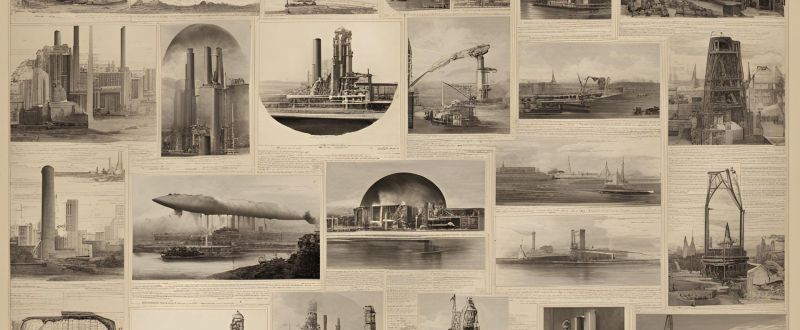
Have you ever wondered why engineering achievements are often overlooked in history books?
Usually, the reason is that we engineers seldom provide information to help historians understand the significance of engineers’ contributions.
Across Australia, an energetic group of volunteers has been documenting Australia’s engineering heritage and explaining the significance of major engineering achievements. The lives and achievements of nearly 700 engineers have been documented, either as short biographies or as oral history recordings. 256 major engineering achievements have been awarded Engineering Heritage Markers since this group started in the 1980s.
The Australian Engineering Heritage website appears to be unique in the world: no other country seems to have accumulated its engineering heritage in an easily accessible form. For example, in the USA, the National Parks Service keeps a historical record but is it not easily accessible. Only a brief announcement reveals its existence.
I joined this group in 2022 and took on the role of secretary for the Western Australian committee. Since then, I have helped consolidate separate state websites into today’s single national site.
One of the challenges we face is that most people associate engineering history with prominent artefacts: bridges, highways, tall buildings, dams and railway engines. Yet these reveal little about the actual work of engineers. As I have explained in these pages, engineers often find it hard to explain what they do each day since much of it seems at first site to be a chaotic series of unplanned interruptions, phone calls, ad-hoc meetings and paperwork (although that’s mostly on computers these days). In my research interviews on engineering practice, the engineers would often ask “Why are you interviewing me? I hardly ever do any real engineering.”
Another challenge is a shortage of documentary evidence. Many of my retired former colleagues have destroyed all the records of their work. It was surprising that many of them hardly ever explained any of their work to their families. After their death, it’s often too late: lifetimes of engineering achievements have vanished with so many of them. In Western Australia, we are perversely fortunate that one of our most notable engineers committed suicide: Charles Yelverton O’Connor. If had died of natural causes, it is likely that we would know much less about his life and work.
We need your help now, before it is too late, before you retire.
Please send us your CV and papers describing significant achievements to heritage.engineersaustralia@gmail.com.
Mark papers confidential if necessary: those papers will be archived and indexed but the contents will remain private. Or, send an archive of documents to your state library. One day, we will find them and write about your achievements along with many others.
Please also send us the history of your firm or organisation, whatever form it is in. Don’t wait for the final perfect copy. You can always send an update later.
Come and join us as a volunteer. We have a few hundred volunteers around Australia in all the major cities. Most join for occasional company and the opportunity to retell stories, but about 20% actively research engineers and engineering projects, or help make the results accessible to the public on our website.
Within our community, there is also a growing cadre of Heritage Engineers who specialise in the preservation and restoration of historic buildings and other engineering artefacts. We run occasional courses to educate young professionals who are finding this to be an attractive professional specialisation.
Register for the 2024 Engineering Heritage Conference in Adelaide.





 THE MAKING OF AN EXPERT ENGINEER