Engineers Registration and Productivity in Australia 2025

This is an edited version of my original post on June 28. The final submission is now available from the links in this post. A big thank you to all the people who provided valuable feedback and suggestions for improvements.

This post releases my draft submission to the upcoming government productivity summit in Australia: it will be a written response to the call for public comment by the Productivity Commission.

In this submission I argue that the current system for registration of engineers in Australia is not fit for purpose. Instead of registering individual engineers we should register engineering firms instead because firms influence the performance of their engineers more that individual attributes like technical proficiency or competency.

I suspect this will be a novel idea for many and might be controversial. Any feedback will be welcome, especially counter-arguments.

Engineers are key actors influencing productivity in Australia. Engineers conceive, deliver, operate and sustain products, infrastructure and systems that enable ordinary Australians to be productive.

There are two significant engineering performance issues in Australia imposing significant avoidable costs on government, private firms and the community.

  1. Large and small engineering projects are failing to meet investor expectations, causing large losses for Australian companies and governments amounting to at least AUD 50 billion dollars annually. These failures arise partly because they remain hidden by their owners so engineers cannot learn from past mistakes, partly because of collaboration weaknesses, and partly because most engineers have only a weak understanding on how their work contributes economic and social value. Apart from the financial impacts, these failures are also delaying our energy transition from fossil fuels to renewables.
  2. Performances on routine engineering work such as maintenance show similarly large opportunities for improvement. UK and Scandinavian research has observed that even in large and well-organized companies, operating and maintenance mistakes contribute opportunity costs up to 50% of reported turnover. The core issues lie with the interactions between people, mediated by computer information systems.

Both issues have significant productivity impacts. The immense costs are potentially avoidable. Even a 10% reduction in losses would be a significant productivity boost.

Neither engineers nor engineering have been mentioned in Australian Productivity Commission reports since the mid-1990s. It seems that the significance of engineering as an influence on Australian productivity has been overlooked in the past few decades. Perhaps the magnitude of the issues I have raised will help to change that.

In the detailed submission, I explain why significantly improved workplace education would help engineers learn how to avoid these costs. Currently, there is no effective feedback of project and engineering practice failures and shortcomings, so it is not surprising that there is no performance improvement.

Policies that incentivise firms to invest more in workplace education for engineers could lift performance standards and might help avoid many of these costly failures.

In this submission, I argue that the most effective policy change would be to introduce a national engineering accreditation and registration agency (NEARA) for engineering firms. Firms would be reviewed and awarded ratings indicating their financial strength, discipline expertise, engineering capability development and training, strength of their systems, processes and procedures, and quality management. Initially it would likely be voluntary for all except firms involved in work posing large safety hazards such as apartment buildings over a certain height, major energy and chemical plants, nuclear installations, tunnelling, large underground or open cut mines, facilities with bio-hazards, etc. As the agency demonstrates its benefits, registration requirements might be widened. Alternatively, if the benefits are substantial, there might be no need to widen registration requirements because firms would seek accreditation as part of their business development.

Engineering professional societies would continue with certifications such as Chartered Engineer and EngExec because these qualifications would contribute towards accreditation ratings for engineering firms. However, the current state-based registration of individual engineers could be phased out over time.

A further policy suggestion is to require government agencies commissioning major engineering work costing more than $500 million to engage appropriately qualified consultants to review project plans before final investment decisions are authorised, and also to perform detailed evaluation studies on the projects and their outcomes 12 months or more after completion. The results of these evaluations should be made available to the federal agency responsible for registering and accrediting engineering firms so the knowledge gained can inform workplace education for engineers.

In this submission I explain why this national approach could be effective, and why the current state-based registration schemes are not fit for their intended purposes.

Illustration Credit: Adobe Photoshop generative AI produced this stereotypical image of engineers at work, supposedly in Art Deco 1930s style. Like all AI these days, AI propagates popular misconceptions about engineers. Engineers don’t wear hard hats in the office! And these safety helmets were not around in 1930! If it attracted you to read the post, then it did its job.

AI: Artificial Incompetence or Actual Idiocy?

I have watched AI pronouncements over the last year or so with great interest, like so many others.

It is 30 years since I argued at a robotics and AI conference, much to the horror and anguish of many computer science colleagues, that AI was better interpreted as artificial incompetence than intelligence.

Has anything really changed in that time?

In my 1992 book, Shear Magic, Robots for Shearing Sheep, I argued that so-called intelligent computers were illusions and that the greatest irony of artificial intelligence research is that it demonstrates how shallow our concepts of mind and intelligence really are. “All we have learned is that the thinking we associate with intelligence is the easiest part to replicate with computers.” Yet, every human shares perception and thinking abilities that, even now, we have not even begun to understand. If you think ChatGPT is intelligent, just ask it to drive your car to the office.

I must acknowledge that the ability of our machines to translate text into other useful languages has advanced. If you are very careful with the original text to avoid ambiguities and colloquial expressions, writing text that is as boring to read as possible, then translation into many languages is near faultless. Instruction manuals and legal documents translate easily, even with Google translate. I use DeepL considered to be better than Google, though with fewer languages.

In this post, I want to explain why I think that we are not going to see many of the great AI advances so many people have confidently predicted in the last year or two. Not for a while at least. I have fallen into the same trap myself: I confidently predicted that self-driving cars would be an every-day reality by 2017!

My argument is based on simple economics that I have learned by stumbling into marketing to help the world embrace Coolzy.

Every summer day, my team members scan digital dashboards to assess ROAS, our return on advertising spend. These days we place most of our advertising with Google through search ads, YouTube, and the shopping strip at the top of your search page, also display ads that appear on so many websites.

In Australia, for example, we aim for a ROAS of about five, meaning that we have to spend $100 on digital advertising to generate $500 of sales revenue. In Pakistan and Indonesia where Coolzy is so much more attractive, we can confidently aim for ROAS of 20 or more, sometimes more than 50. The reason why Google, Meta and the other vast digital platforms are so profitable is that advertising with them really works.

Let’s explore this a little deeper.

Typically, we pay Google or Meta around one dollar every time someone clicks on one of our ads and lands at our website. We pay a tiny fraction of that every time one of our ads is displayed on a screen, somewhere in the world.

Yet only one in a hundred website visitors buys a Coolzy, perhaps two on a good day with a threatening heatwave announced. That’s why we have to pay for those other hundred or so ad clicks.

If, like me, you enjoy tossing provocative questions at ChatGPT and Gemini, you are benefiting from the money we pay to Google for our ads. It is millions of companies like us, large and small, paying for digital advertising, that have made Google what it is today. Google and Meta live on advertising revenue. And the world only has so much money to spend on advertising.

A few days ago, Google announced their next big step in AI… Gemini. I asked it my usual questions like “tell me about Pakistani members of the Australian cricket team”. Gemini matched ChatGPT’s response last year, naming Usman Khawaja and Fawad Ahmed, an improvement on Bard that completely flunked the answer. In contrast, Bing’s new ChatGPT copilot only listed members of the Pakistan cricket team in its response this morning, a big backward step from ChatGPT last year. Many others have made similar comments.

Google, Meta, OpenAi and so many others are chewing through vast amounts of electricity and investors’ cash, running hundreds of thousands of nVidia gaming chips to build what are now known as large language models (LLMs), essentially vast networks of mathematical statistics that predict the next few words you are looking for without any understanding of what the words mean. The models emerge as they scoop up and process trillions of words from websites across the internet. Machine translation abilities rely on huge collections of documents appearing simultaneously in two or more languages. The UN and EU websites are goldmines for translation engines, reflecting the efforts of countless human translators over the last few decades.

Like many others now, I suspect that this huge expenditure of treasure and energy will disappoint in the end. Vast investments are vanishing like water into sand in the hope that some huge advance in advertising effectiveness will emerge, because it is only advertising that will sustain the successful winner in this race. And, something drastic has to change to make the economics add up because these LLMs are enormously more costly to run than traditional search engines.

So, back to Coolzy.

What would persuade me to pay $10 or even $50 to Google, Microsoft or even Amazon, for someone to tap on a Coolzy ad on their smart phone?

I would do that if, and only if the person that taps the ad is really going to buy a Coolzy. That means that Google, Microsoft and Amazon have to predict human behaviour ten times, or fifity times better than they can now. And I can’t see any sign of that kind of improvement, yet.

Recently I came across perplexity.ai, initially impressing me. I asked questions about Coolzy and its responses were so good that I am tempted to recommend it to our website visitors if our primitive chatbot can’t answer their questions. Perplexity have announced a copilot that engages a user in a conversation to help narrow down the focus of their ‘knowledge’ search. I thought to myself, Ah ha, this might lead be a search engine that really can find someone ready to buy a Coolzy. If it works for us by finding people ready to buy a Coolzy, I would pay far more than Google for their website visitors. The perplexity business model just might eclipse Google, or so I thought.

I put perplexity’s copilot through an extended test. I pretended to be someone looking for a low-power aircon that works in tropical humid heat, but with no knowledge of Coolzy. Sadly, perplexity’s copilot failed. I was more confused and frustrated by the experience than helped. Despite telling me that evaporative aircons don’t work in high humidity, it kept recommending the tiny USB-powered so-called air conditioners like evapolar that use water evaporation, and are little more than toys. They only work in low humidity and even then, only produce a tiny cooling effect.

Thinking about this, I realized that perplexity has perplexed itself because it cannot distinguish truth from faction, the vast quantity of facile text created by marketers to drive search engines to misleading websites, building upon confusing ideas that even engineers cling to about air conditioning. Hence artificial incompetence.

For a decade or more, commercial and respectable website builders alike have been seeking Google search rankings that depend on vast amounts of text that mention something that might be relevant for a potential visitor, but the text does not need to be either factual or logical. Now, one of the main applications being touted for ChatGPT and Gemini is producing faction even faster to attract search engines, increasing the pile of meaningless internet content exponentially.

I am helping to build a website about the history of engineering in Western Australia. Despite the large quantity of carefully researched text there, Google ignores it because it thinks the site is unlikely to attract a paying customer. Perplexity knows about it, but not Google.

LLMs, therefore, seem to have become imprisoned by the marketing industry that has created vast quantities of meaningless text to promote website Google search rankings. LLMs are not much good at generating anything logical anyway. They regurgitate a digested form of the garbage that represents so much of the internet today. In universities, we struggle to help our students distinguish the small quantities of reliable information out there.

Even academic publishing has become an ever-growing archive of papers, most of vanishing significance, that few people ever read apart from the authors. Academics are rewarded for publishing papers, not reading them.

LLMs will need to be able to distinguish truth and logic from faction if they are to provide anything reliably helpful. And that will take a long time, I suspect.

I often wonder whether the AI hype all been a ploy by the IT industry to seduce investors once more. The industry has monopolized the venture capital supply for two decades without creating appreciable productivity gains. The transition to renewables and electric vehicles is taking an ever-increasing share of investment capital, casting shade over silicon valley’s cathedrals.

Roger Penrose argued that biological intelligence relies on quantum effects (see his book, The Emperor’s New Mind). He inspired physicists to work on quantum computing, until recently flagged as the next great step in AI. However, I suspect that practical applications are still decades away.

Is AI really taking human civilization to the next inflection point?

Yawn.

It’s time to talk about Coolzy. No LLM will keep billions of people cool in the coming century.

Image by Anca Gabriela at umsplash.com

PS: WordPress now offers to generate a summary of my post (presumably using AI). I tried it an immediately discarded the result which was so mind-numbingly more boring than my own writing. If that’s the future of writing, the internet will become humanity’s greatest garbage dump even faster! Bring back books, please.

Why do most hot countries remain poor?

In my first post in this thread, Pakistan is Never Boring, I introduced the key role that engineers have in economic development. In this series, I will explain how my research journey has led me to an understanding on what seems to be preventing economic and social development in countries like Pakistan and how engineers might remove most of the impediments. Pakistan is one of many countries experiencing an extremely hot climate, possibly the hottest on the planet, for several months every year. It also has cold winter months too.

Have you ever wondered why hot countries tend to be less prosperous, with some notable exceptions?  

Think of India, Bangladesh, Pakistan, Indonesia with more than a quarter of the world’s population. Then think of countries in Africa such as the Democratic Republic of Congo, Cameroon, Nigeria, Ghana, North and South Sudan, Kenya, Tanzania, Zimbabwe and many others.

There are also some cold countries that are poor too. Russia today is a relatively poor country.

Of course, measurable economic wealth is not necessarily related to happiness, but it certainly helps with health and education.

READ MORE, ABOUT 10 MINUTES – BUT IT WILL OPEN YOUR EYES TO SOMETHING NEW

What we know, and mostly don’t know about engineering practices

This is the script for my REES-AAEE-2021 Keynote. The video is here, and the powerpoint slides are available on request if you would like to use them for education purposes.

For a sustainable future, we need large productivity improvements. Engineers are critical contributors, but we need deeper understandings of engineering practices and how education influences them to make the necessary improvements. Without this, education reform arguments are fragile at best.

Read the Script of the presentation (30 mins)

Has Engineering Divorced Economy?

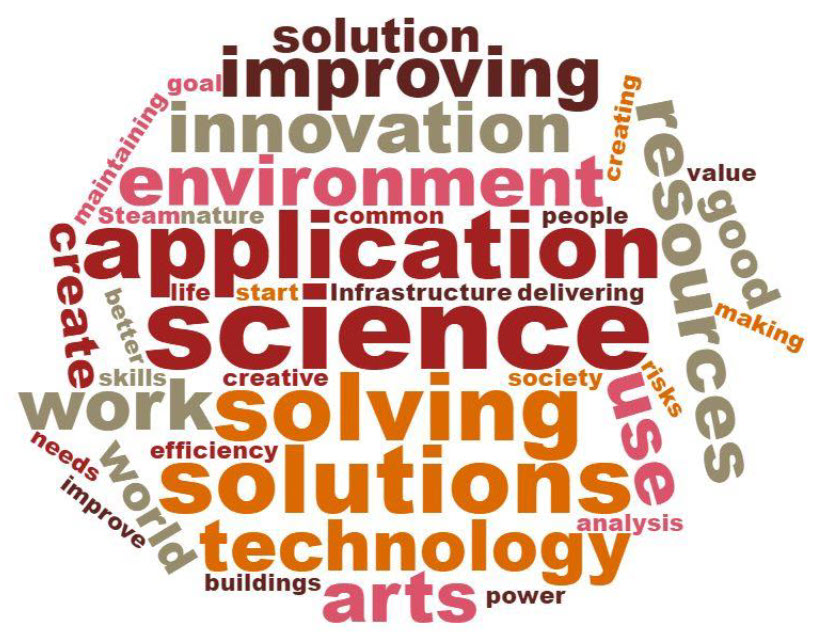
I came across this report on the economic contributions of engineering prepared by PWC for Engineering New Zealand. In preparing the report, PWC and Engineering New Zealand assembled about 20 senior engineers from a representative sample of industries and asked them to write a brief description of engineering.

Fascinating.

Here’s a word cloud summarising the result.

Now, what’s gone missing?

Remember that this was an exercise in assessing the economic significance of engineering in New Zealand…

Still wondering?

Read more to see what I think is missing

Another reason for engineering project failures

This series of posts all has to do with the ways that engineering is critical for our economy, no matter whether you are in an advanced industrial country like Australia, or a developing and low-income country like Bangladesh.  Unfortunately, that link is hardly ever mentioned in engineering schools, let alone understood.

Also in earlier posts I mentioned our appalling and worsening record in completing major engineering projects, and how that is affecting the world’s economy right now, discouraging investors.  Why would anyone want to invest their money with engineers when there’s a good chance of losing all of it, and not much chance of making money?

In this post, I am going to advance another possible reason large projects can fail.  This time the root cause stems from engineering education.

In your first year of engineering, you probably learned about stress and strain. Even if you became an electrical engineer.  Maybe if you’re software engineer you missed out on the fun of playing with elastic beams and springs, noticing how they stretch in proportion to the applied load.

It’s fundamental knowledge for mechanical and civil engineers, and valuable for others.  In most engineering schools, you won’t graduate without having passed an exam on it.

Now, what would be the result if engineers had to pick up that knowledge on the job? Continue reading

It’s The Engineering…..

Its-The-Engineering“It’s the economy, stupid!” was the line that secured Bill Clinton’s election campaign in 1992 against sitting president George W Bush.  Now, with economies struggling to grow it’s time to recognise that it’s engineering that drives the world economy, and we engineers have to recognise how we can play our part and get paid better at the same some.  Our performance can, indeed has to improve. Continue reading

Why graduates have poor business skills – part 3

On repeated occasions, surveys in Australia and elsewhere report business leaders complaining about graduates without appropriate skills.  Most recently, Dr Simon Eassom has proclaimed this in an article ‘What will the Uber university look like?’ in the Australian Campus Review newspaper.  He thinks that traditional universities could be swept aside just like Uber is transforming the taxi industry in many countries using new technology.

Recently I wrote about two factors that could explain this: the implicit privileging of writing about all other forms of communication and implicit relegation of collaboration throughout our education system. Graduates, therefore, tend to have weak skills in listening, seeing and reading, even drawing and visual communication, all of which are critical for engineering and most other professions.  Especially for engineers, it is unlikely that they know how to collaborate effectively since this is rarely if ever taught. Even though students practice teamwork in many group projects, in the absence of explicit teaching and assessment, bad team behaviours will be reinforced just as much as good ones. And teamwork is different from effective collaboration in a technical context such as engineering.

In our research, we observed that young engineers rarely practiced effective collaboration techniques.  Some older engineers developed remarkably effective skills but without being able to explain them.

This helps to explain why the reputation of graduates is so low, particularly in the minds of business employers. And it is not just engineers, apparently, that are said to have terrible communication and collaboration skills.

My research on engineers provides some novel answers that lie deep within the structure of our education systems. There are some other factors that have emerged from this research affecting not just engineers, but all graduates.

In this post I will describe the third of these factors: the implicit devaluation of ideas about money in universities.

Continue reading