Focus Stacking – Something New for Me

Updated 2nd January 2022

Some of you may know that I love photographing the unique wild flowers of Western Australia, especially in the pristine bushland on our farm near Wandering, south east of Perth. We have about 400 different varieties, just on a couple of hundred hectares.

On my late mother’s birthday, 19th August, I casually glanced through the book Wildflower Country by William and Kaisa Breedon, a magnificent volume featuring one of my favourite wildflowers on the cover. I was struck by the stunning quality of the photographs in the book. They were not so forthcoming on the details of their methods, so I did a bit of online research and guessed they were using focus stacking. I resolved to try the technique for myself. [some results]

Read about this technique

Bill Williams – Science Education Award from University of Lisbon

I was very happy to hear that Bill has received this prestigious award for his career achievements and especially his contributions to editing the Journal of Engineering Education and the European Journal of Engineering Education in the last 6 years.

Bill convened the first international meeting to bring researchers studying engineering practice together in Madrid in 2011, and went on to be the lead editor for the book “Engineering Practice in a Global Context” with chapters developed by the participants. Bill managed to persuade his friend Etienne Wenger to come, joint originator of the well-known concept of “Communities of Practice”.

Bill and I worked together on developing our theoretical understanding on how engineers contribute commercial value from their work.

The photo reminded me how fortunate I am to be in Perth, Western Australia, where we have neither Covid-19 infections nor restrictions, except we cannot travel anywhere without a tedious process to get rarely granted permission.

Listening

I have always emphasised listening as the single most important skill for engineers to develop. It’s easy too. It’s not the same as hearing. So I was happy to come across this podcast on listening from Australia’s ABC. It’s entertaining and thought-provoking. If you want to improve your listening skills, look for an ABC podcast with a transcript. Listen to the podcast (at full speed, for just 5 minutes or so), then prepare your notes, and then compare your notes with the transcript to find how much you missed. For more see “Learning Engineering Practice”. Or buy the book “People Skills” by Robert Bolton.

Otter.ai is a great app for improving your listening or language comprehension. Listen to any talk radio or podcast. Use Otter to create a transcript while you listen, bot don’t look at it yet. While listening, take notes. After about 5 – 10 minutes, stop listening and stop Otter. Expand your notes for a few minutes. Then compare your notes with the transcript. Highlight significant parts of the transcript that your notes did not mention. Give yourself a score out of 100.

Repeat this exercise daily and you will be surprised at how quickly your listening skills improve.

Updated 11th May 2023

Illustration Credit: Saeed Karimi at unsplash.com

Winners of the Global Cooling Prize announced

I rarely stay up late to watch serious TV. However, this announcement, three years in the making, was something that I just couldn’t miss.

At Close Comfort, we sincerely congratulate the Global Cooling Prize 2021 winners along with all the judges and participating teams! Everyone involved in the Prize helped develop new green technologies that can cool people around the world without warming or harming our planet.

Continue reading

A Big Question

How are we going to adapt engineering education to prepare coming generations of engineers for climate warming and the need to protect people and infrastructure? How can we prepare them to re-engineer almost our entire civilisation to eliminate greenhouse and other harmful emissions in 25 years?

As you would know, I often write about engineers and engineering, and education issues. However, I have usually stopped short of specific recommendations, relying on my books and articles to convey ideas that educators can use.

Next week I am speaking at a panel discussion at Engineers Australia Perth on Wednesday March 31, 5:30 – 8pm. Register here to join in the discussion and contribute your ideas, or if you cannot join us then, reply to this post.

Continue reading

Feeling Highly Honoured

Last Monday evening, on International Women’s Day and Begum Sarfraz Iqbal’s birthday (Samina’s mother)… if ever there was a role model for women Samina’s mother was one of them)… I was honoured by The University of Western Australia with a Chancellor’s Medal.

Thank you, Ayman Haydar, for this video of the citation by Prof. Amit Chakma, Vice Chancellor, himself an engineer and his first graduation ceremony since taking on the role last year. It was also a privilege to receive the honour in front of colleagues from the engineering school and a couple of hundred graduating engineers. One of my former students gave the occasional address: it was reassuring to feel that such a confident young woman had learned something from my teaching.

Changing notions of comfort

I am so thankful I don’t have to work all the time in an air-conditioned office building. Especially since Covid-19, our entire Close Comfort team works part of the time at home. We’re happier and feel healthier too.
Of course, I have a Coolzy personal air conditioner with me. (Since 2021, Close Comfort portable air conditioners have been branded with the name Coolzy). Our team members each have at least one at home as well.
Lee Kuan Yew, honoured as Singapore’s founding father, loved to tell everyone how air conditioning enabled today’s Singapore by providing a comfortable working and sleeping environment. However, there’s a dark side that comes with 20th-century air conditioning systems.
It is well established that people who live most of the time in constant temperature air-conditioned buildings lose their natural thermal acclimatization. As a result, they only feel comfortable at about 23 °C.
Recently I hailed a Singapore cab and climbed into the shiny black refrigerator on wheels, feeling so glad I remembered to bring a cardigan tied around my shoulders. The driver exclaimed, “Ah, it’s so hot today, la!”
“What’s the temperature?” I asked.
“33, it’s really hot, la”.
“But, yesterday it was 32”.
“Yeah, 33, it’s so hot today, la!”

Continue reading

Productivity isn’t everything, but…

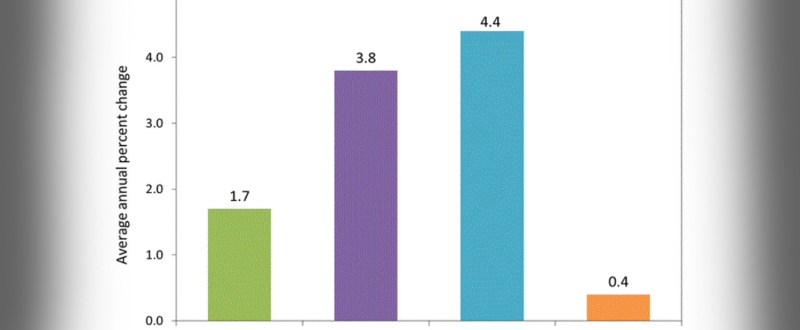
No wonder Trump can easily still command rustbelt supporters. Stagnation in the US manufacturing industry is killing prospects for wage rises. Bureau of Labor Statistics data released two weeks ago shows that while productivity increased by about 3% annually from the 1980s till 2007, annual growth since has been only 0.4%. Most of that, and more, is needed for sustainability improvements like changing to clean energy.

Labor productivity depends on engineered tools, machines and materials, so engineers are the key people to restart productivity growth. While economics and labor saving solutions were the priority for engineers in the 1950s, as evidenced by the ASEE Grinter report, now that seems to have been forgotten. Our research is revealing that today’s engineers have limited understanding on how to generate commercial value.

Students need to learn the fundamental purpose of engineering. Distilled from our research on hundreds of engineers in several countries, that purpose is to enable people to be more productive.

“Engineers are people with technical knowledge and foresight who conceive, plan and organise delivery, operation and sustainment of artificial objects, processes and systems. These enable productivity improvements so people can do more with less effort, time, materials, energy, uncertainty, health risk and environmental disturbances.”

Sustainability depends on similar improvements.

As Paul Krugman wrote more than 30 years ago,

“Productivity isn’t everything, but in the long run it is almost everything. A country’s ability to improve its standard of living over time depends almost entirely on its ability to raise its output per worker.”

Economists are hoping that the digital economy will restore productivity growth. It might. But in a world where information supply is exponentially increasing, its value must be exponentially decreasing.

Continue reading

Summer Again

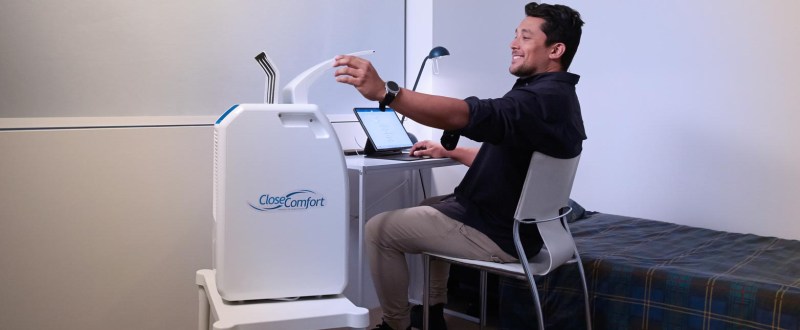
It’s summer (but it’s not me in the photo): the magnetic needle inside my old-fashioned max-min mercury thermometer shows the temperature on my veranda reached 47°C recently. Close Comfort, an old PC8 model made in 2015 improved with the latest compact focus enhancer. It sits at the end of my bed each night and my Igloo tent is in the wardrobe should I need it. I move it to my study if I’m working from home.

As the inventor, it’s nice to be able to tell you that I use it practically all the time I need cooling.

It’s not just that I invented it.  Or the knowledge that even one small tree absorbs more CO2 than is created at the power station by the electricity that it uses. Even less CO2 with solar electricity.

I have even noticed that I adapt to the heat more easily when using Close Comfort, so I don’t have use it all the time. There is evidence emerging from physiological studies that might support this perception. It’s good because my wife uses it too in her study: the kitchen where she just has to reach across to make herself cups of tea.

Continue reading